As far as school years go, this one has been busy. Since leaving Turkey last June, life has been pretty full on. With new jobs, family occasions, and setting up life here in Switzerland, I was due for a bit of a break once the school year ended.
Slovenia has been on my mind for a while, enticing with its natural beauty and warm, welcoming culture. Realizing that Slovenia shared a border with eastern Italy (geography was never my strong suit), I mapped out a train route and booked my tickets.
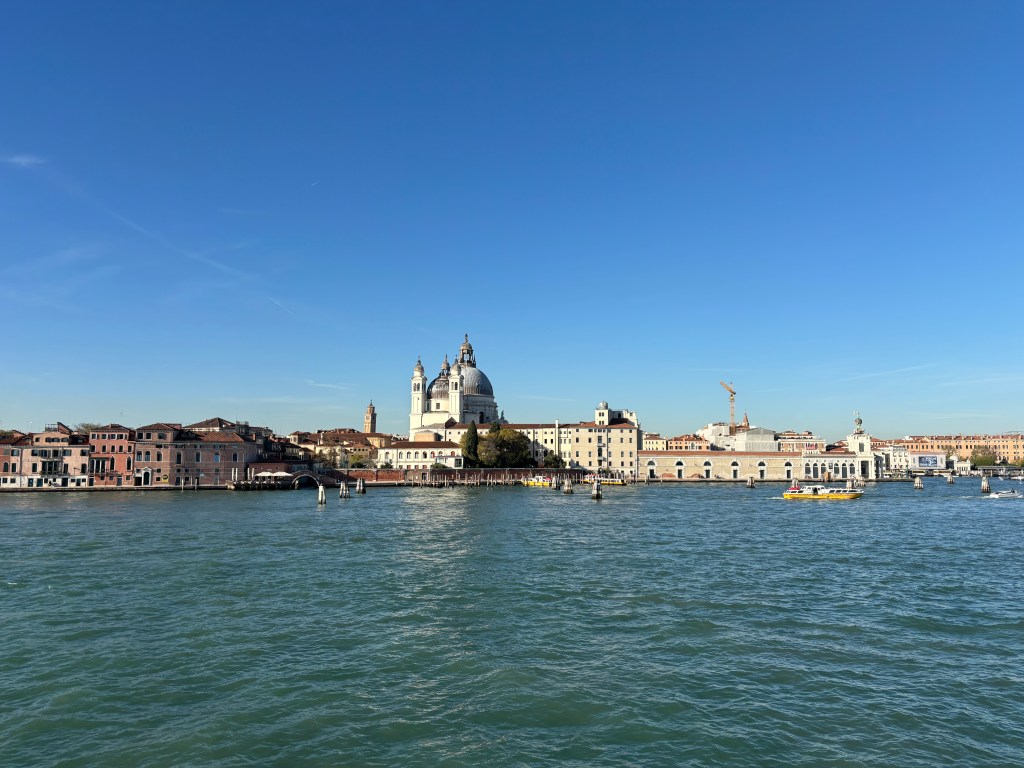
Verona was my first stop – a charming Italian town that needs little introduction. Juliet’s balcony, Ancient Roman ruins, and Renaissance artwork are the major draws here. Just under four hours by train from Lugano, it made for a perfect stopping point on my way to Slovenia.

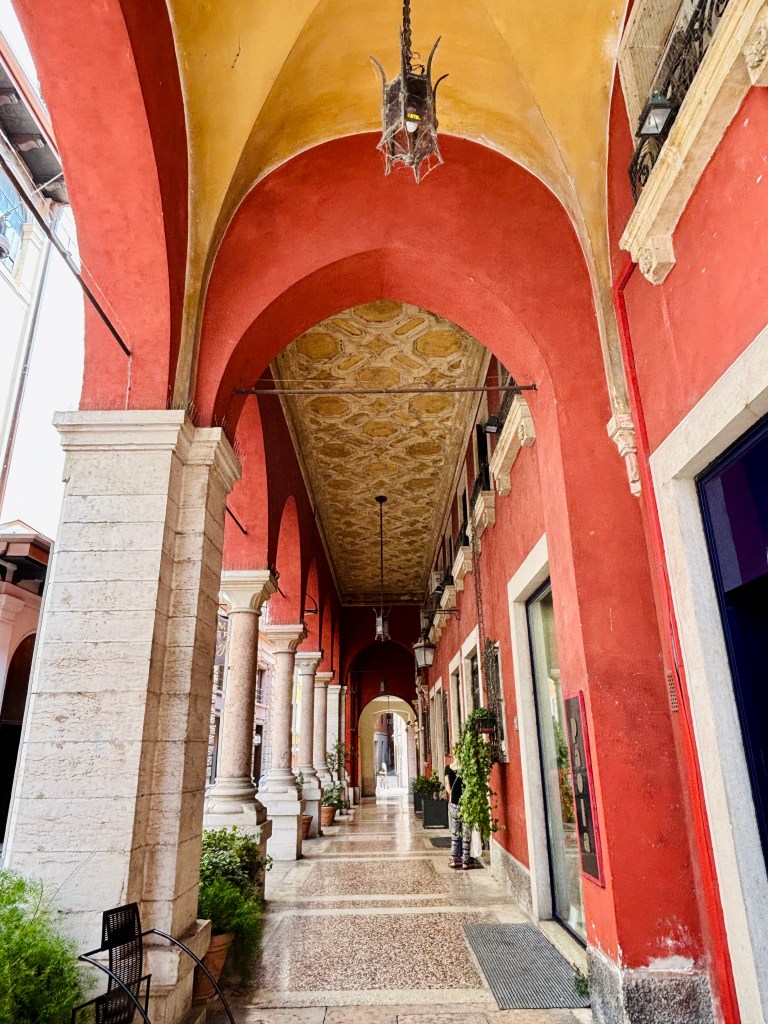
While Verona’s cultural capital would shine on any given day, I had not counted on such extremely hot weather in early June. An unrelenting heatwave made for a bit of a brutal day in Verona. 96F in the shade, I spent much of my time seeking reprieve from the heat – not an easy task due to the lack of air con in these parts.


I awoke early the next morning to set out for Ljubljana, Slovenia’s capital city. While catching a short connection in Trieste, I grew enchanted with the city. Perhaps this Italian town perched on the Adriatic would have made for a breezier, cooler layover spot. I made a note to return.
In general, Europe does not set their air con to freezing, a la a Target in July, but my trains were all comfortable and cool. We rolled across the Slovenian countryside and I was struck by the lush, dense forests and rolling hills of the farmland.
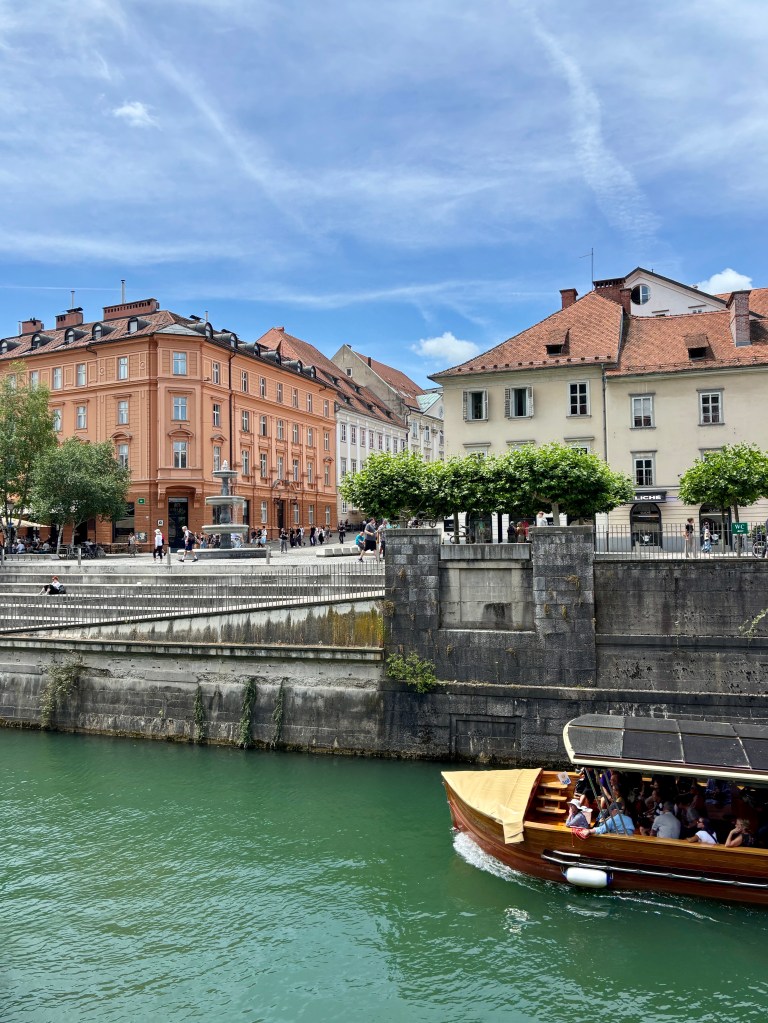
Pulling into Ljubljana, I walked a kilometer from the train station into the heart of the medieval old city. In an effort to make this a truly restful trip, I had booked six nights in an Airbnb right along the castle walls, with the intention of taking day trips to other towns and sights farther afield. This was not a trip for checking into new accommodations every night.
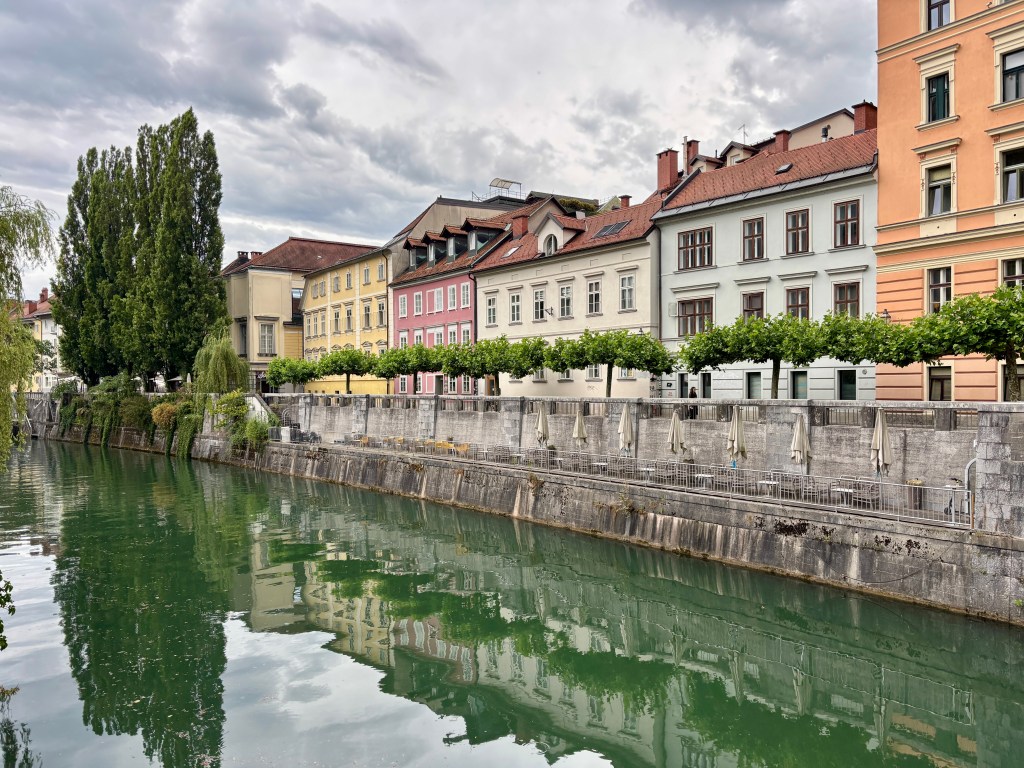
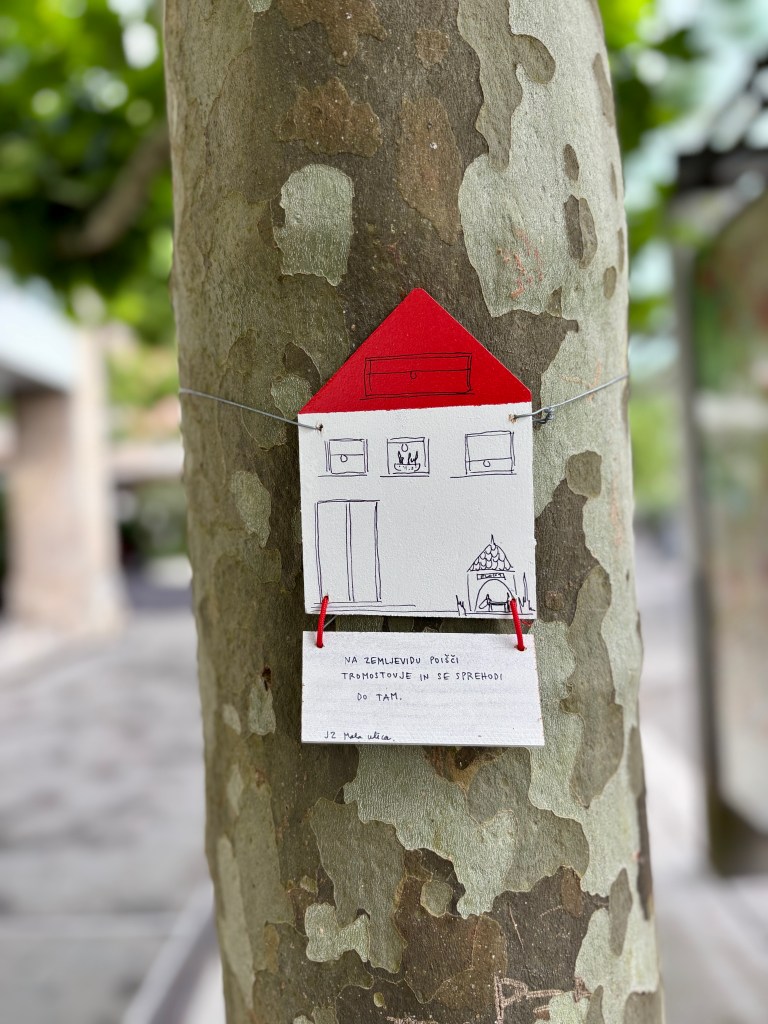
Ljubljana, come to discover, is one of the greenest cities in Europe. The city leaders have set a goal to be carbon neutral by 2030. With beautiful parks and tree-lined avenues, the city attracts visitors interested in both its Roman and Slavic history, as well as eco-tourism. I was a big fan of the fresh local fare and the daily markets. Peaches and cherries are in season.
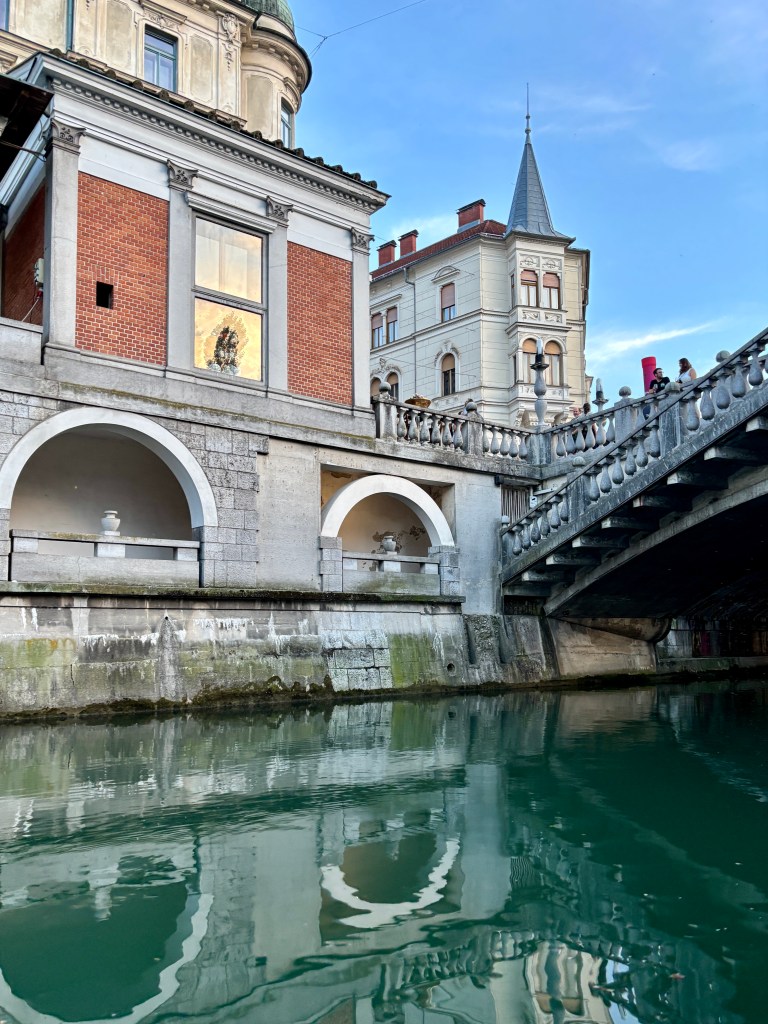

Given its ripe geographical location, Slovenia’s land and people have seen great change over the past 500 years. Once ruled by the Hapsburg monarchy (you see the Austrian influence in the architecture), Slovenia spent 60 years as a part of the Austro-Hungarian Empire before becoming a part of the country of Yugoslavia following World War I. Initially ideologically aligned (communist after WWII) with but not part of the Soviet Union, Yugoslavia and the USSR underwent a major rift during the Tito-Stalin era. After cooler heads prevailed (ie. Stalin died), Yugoslavia continued to rebuff Soviet advances right up through the fall of the Berlin Wall. The first republic to secede from Yugoslavia in 1991, Slovenia achieved independence relatively peacefully, avoiding the bloody conflict the region underwent in the impending decade.
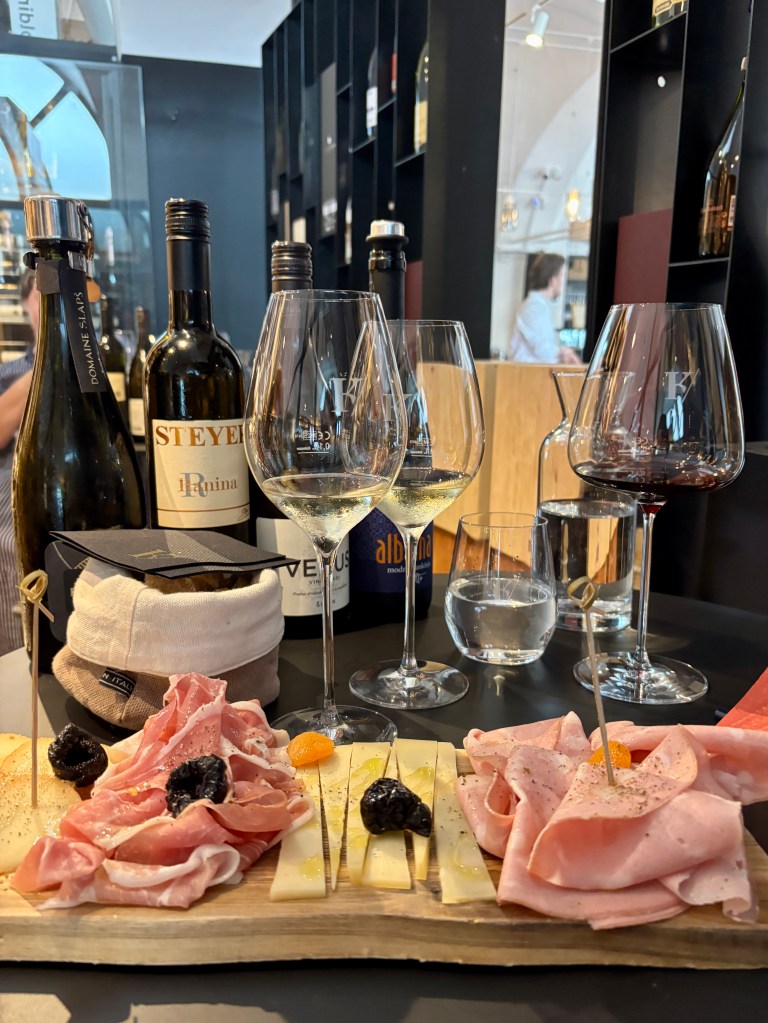
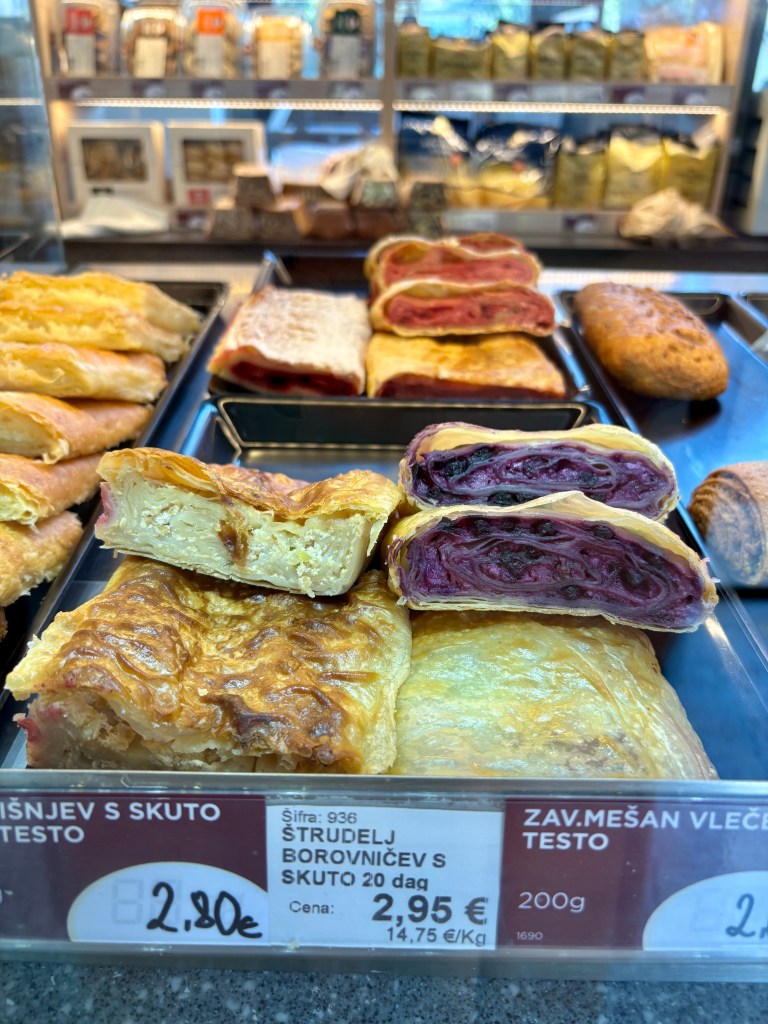
All this being said, contemporary Slovenians tend to focus on the country’s Bavarian influence rather than Yugoslav. The food is hearty (think buckwheat and meat) and local wine is a source of pride. I took the opportunity to do a wine tasting at Koželj Wines that was fantastic, incredibly nice people. Be sure to pair with a charcuterie board if you go. I can attest that Slovenians have a lot to be proud of – especially their dry whites and their hospitality.
Textiles are also prized in Slovenia, a shared practice across the Balkan region. Interestingly, traditional Slovenian textiles drew a heavy influence from India and the Far East, likely due to their proximity to the Silk Road. The prints are graphic and geometric rather than Slavic (think embroidery in repeated patterns). Graphic design is a big deal in Ljubljana. A must-see in town is the Slovene Ethnographic Museum. I was blown away by the depth of cultural heritage on offer and the creative exhibition work of their curators. I got to speak to the resident weaver on site and learn about the local traditional colors and patterns.

Just around the corner from the museum lies a very interesting autonomous area called Metelkova. A bit reminiscent of Copenhagen’s Christiania zone, this area features a former army barracks converted into artist studios. At night it transforms into an alternative epicenter of nightclubs and bars. Self-regulated, the police do stop by but the resident artists have a deal with the city to be personally responsible for the area, which remains very tidy. Overseen by a tribunal of the general populace, these folks are personally invested in keeping the peace. As long as you don’t take pictures of anyone, the public is welcome to visit. I felt completely at ease here.


My first day trip took me to the Julian Alps, about an hour outside of Ljubljana. As always, Airbnb Experiences didn’t let me down – my guide was fabulous and has perfected a beautifully relaxing day trip over the past decade. We all had lunch together at a great Slovenian restaurant and swapped stories.
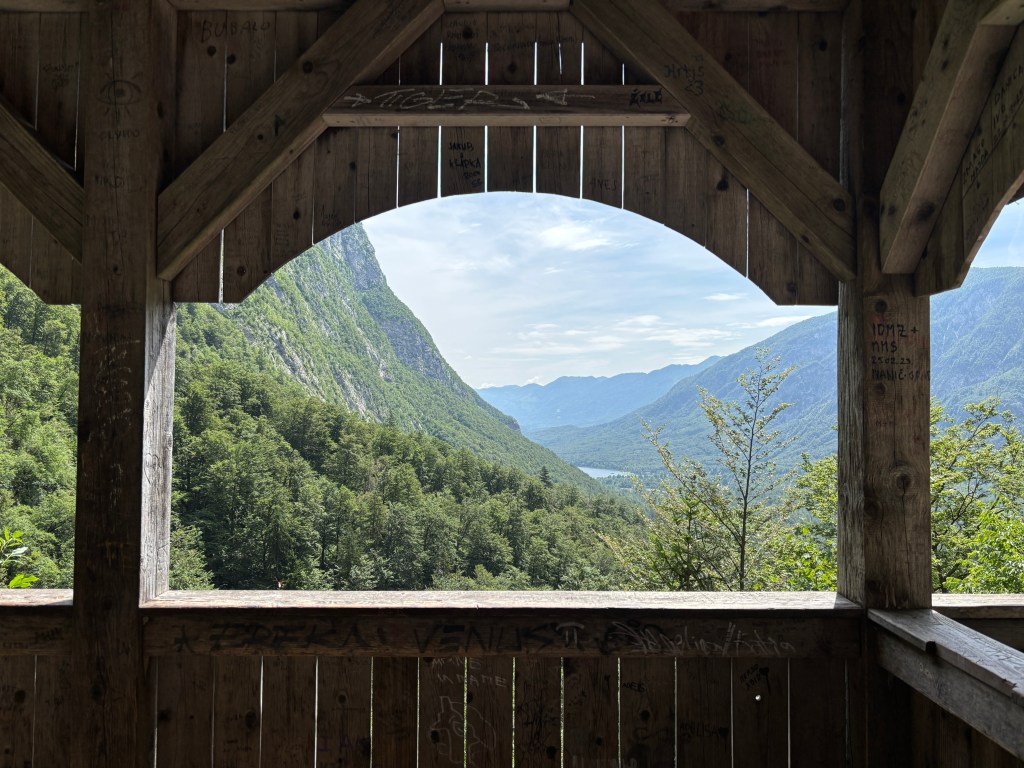
Starting at a trailhead, we hiked 20 minutes up 500 steps to the Savica Waterfall. It was stunning. We checked out Lake Bohinj next and I made a little painting while I dipped my toes into the beautiful water.
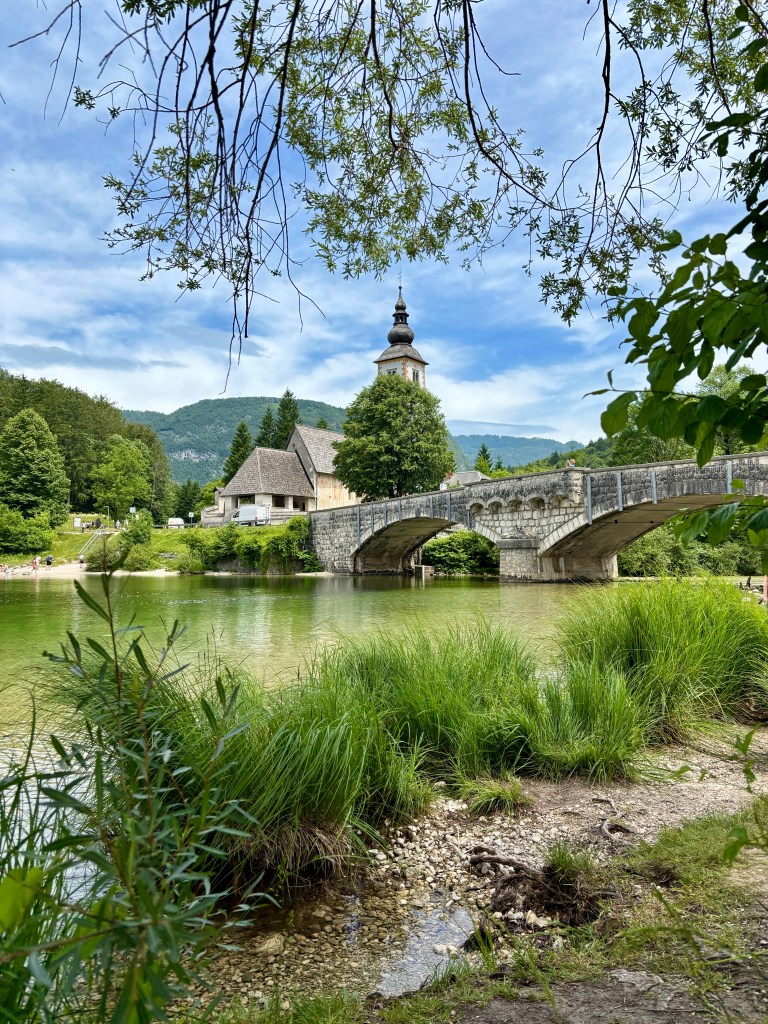

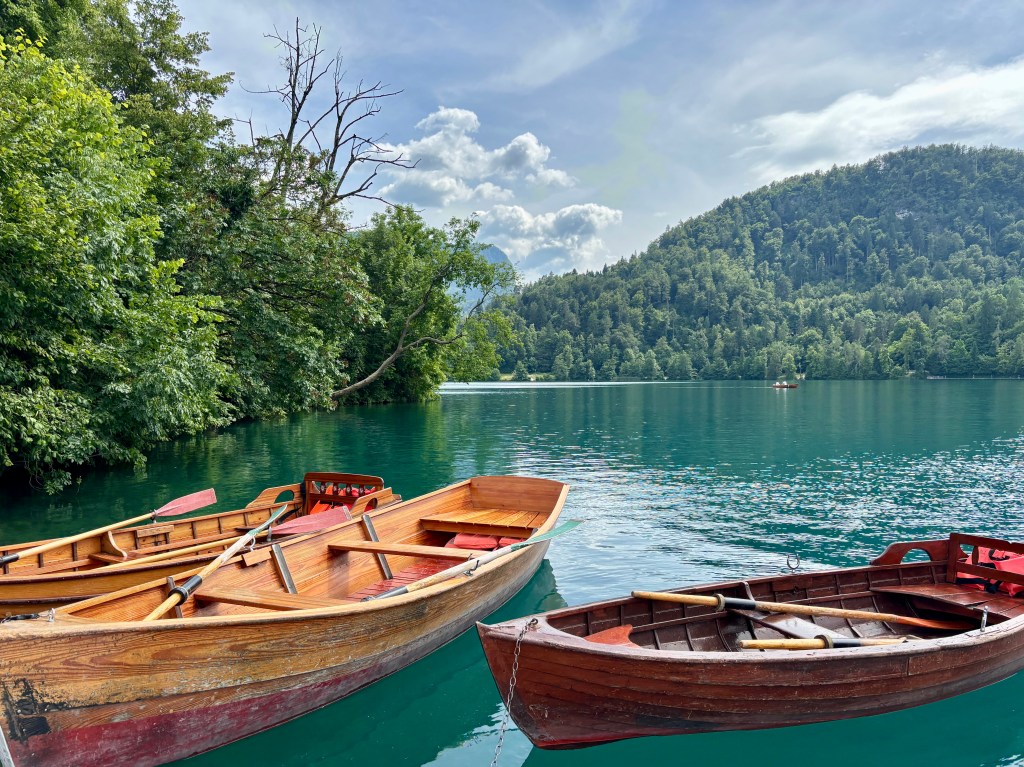
Last stop was Lake Bled where a group of us rented a row boat and had a hilarious time getting out to the island and back. Lake Bled has always been on my bucket list – a crystal-clear lake featuring a picturesque island housing a church in the center. All in all, it was a great day with great people.
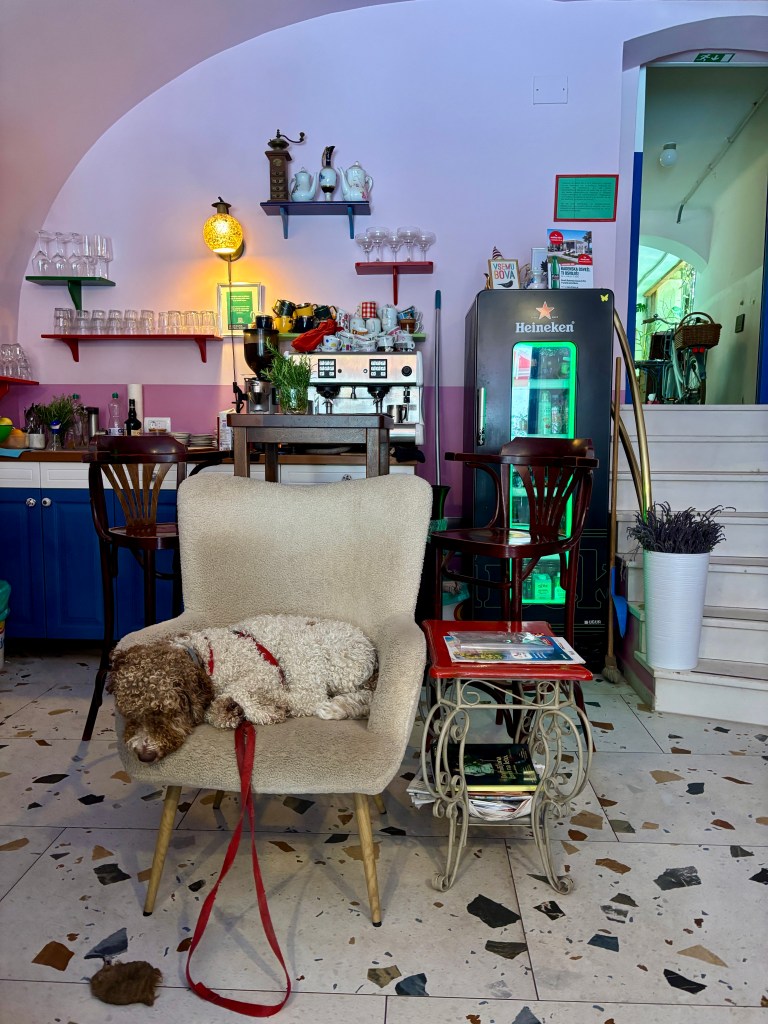

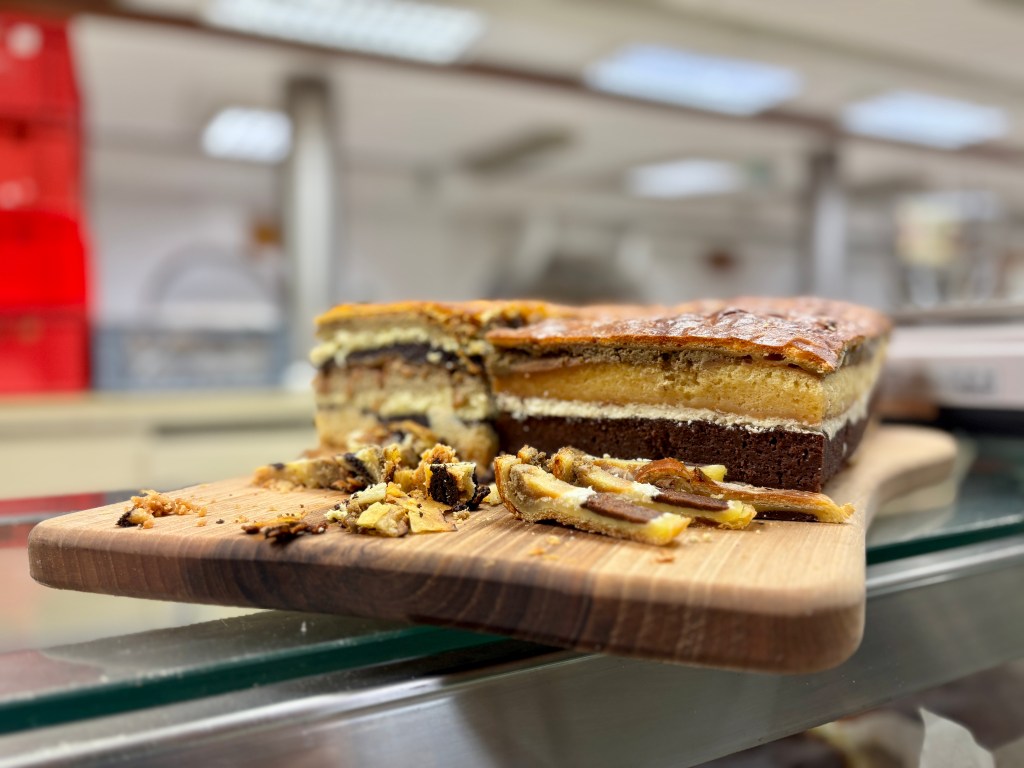
My last little adventure in Slovenia was a day trip to Ptuj. This one I organized on my own, taking the train two hours northeast to the oldest city in the country. I was once again impressed by the welcoming nature of the people – from a shop dog named Ricky to an art gallerist to a local baker, everyone was kind and wanted to know where I was from. Basketball is a pretty big deal in Slovenia so the Celtics were a talking point.
Overall, Slovenia proved to be a very solid choice for a solo vacation. It was safe (the city of Ljubljana is super accessible – far cry the stairs of Lake Como), full of diverse history (the Ottomans never made it that far but Jason and the Argonauts did), and tons of fun for active visitors (the country boasts the highest Olympic medal count per capita of athletes – there’s something in the water). I would definitely recommend checking out this slightly less trodden path before or after a trip to Italy. As for me, Art Basel was up next…
 SwissMissMeg
Leave a comment