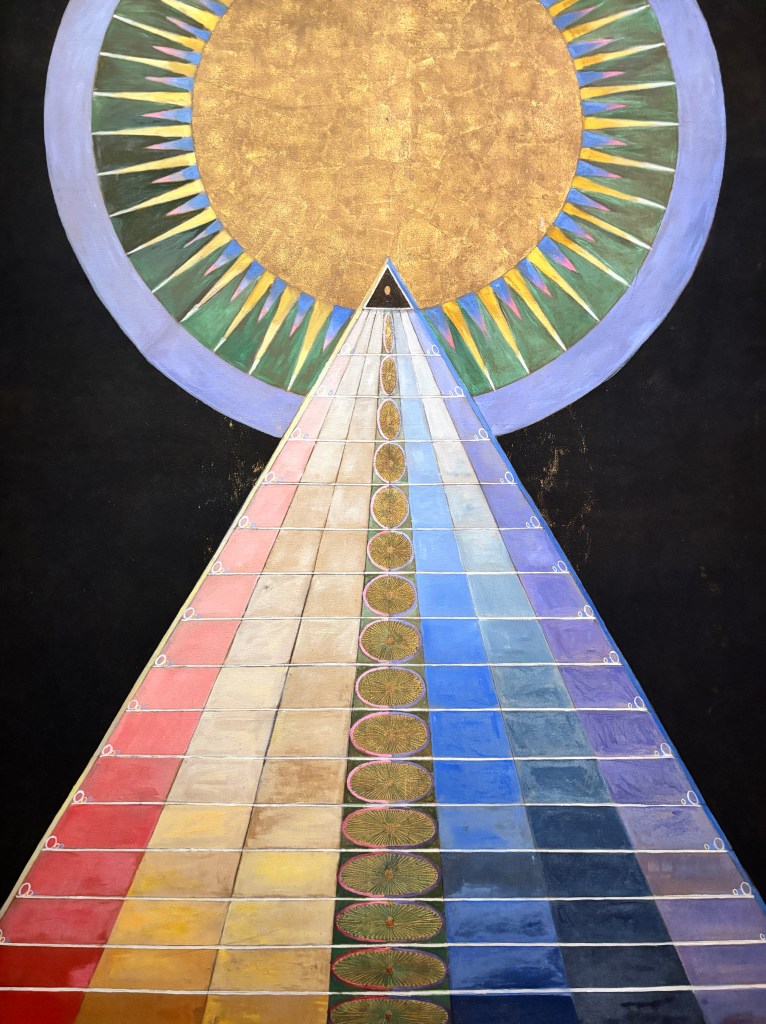
In May, I saw an advert for an exhibition of Hilma af Klint’s work in Paris. Klint has only recently become an artist known to me, drawing me in with her combination of color theory and mysticism. With summer break here, the show made for a perfect excuse to visit Paris.
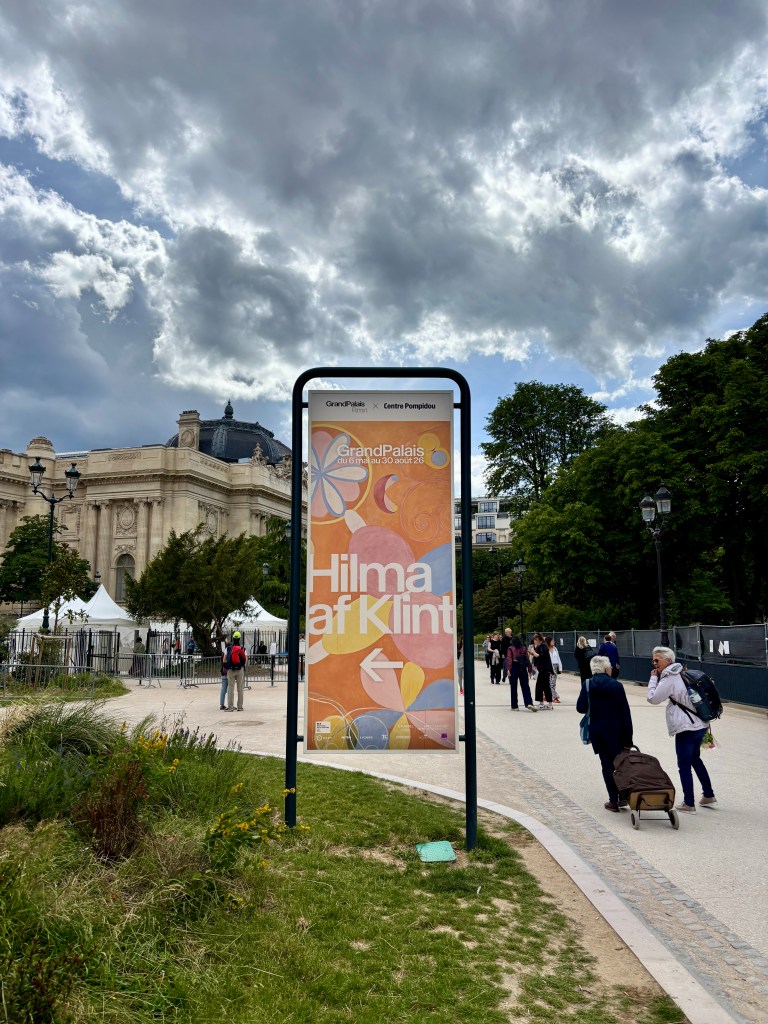
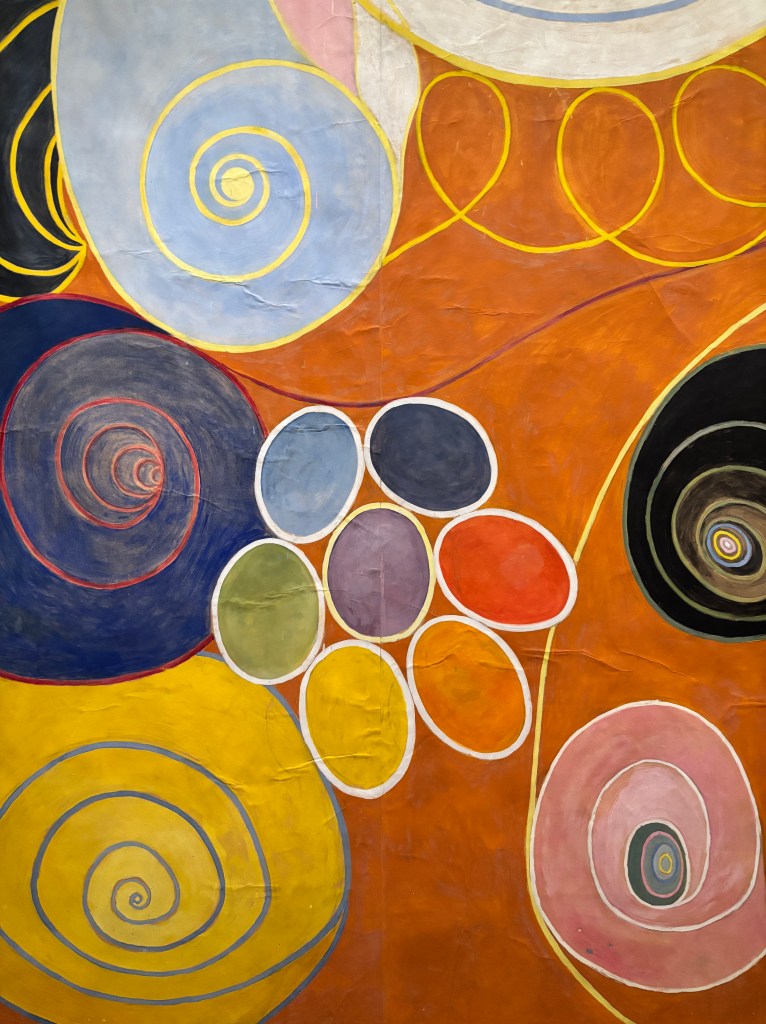
I departed early from Lugano and made my connection in Basel. The high-speed TGV rail provided gorgeous views of the French countryside. As the exhibition was held at the Grand Palais, situated along the Seine, I chose a small hotel close by in the 8th Arrondissement. With the Pompidou closed for renovations through 2030, the Beaux-Arts Grand Palais proved the perfect foil for all the 20th-century rebels on display at the moment – Matisse, Klint, and Nan Goldin chief among them.
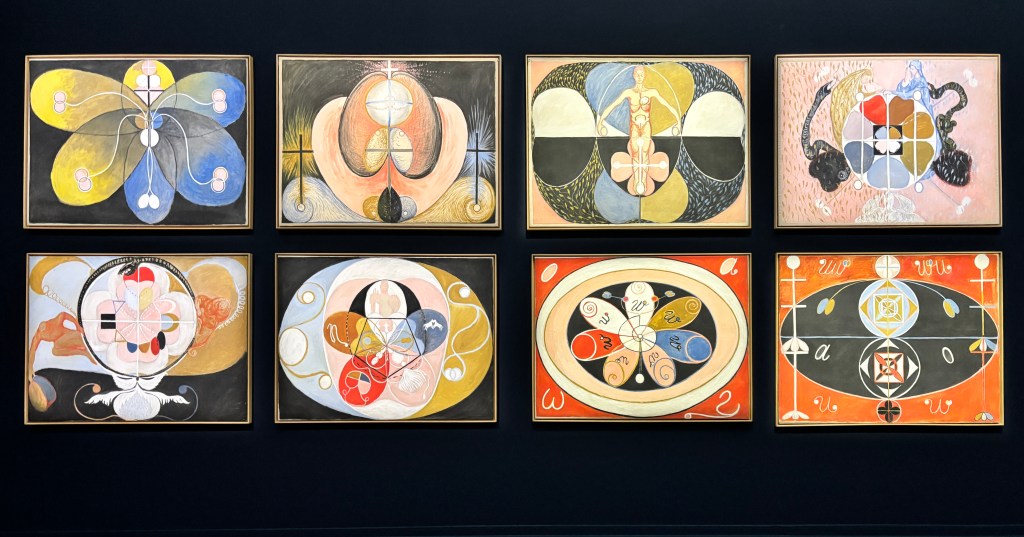
Hilma af Klint led a bold, colorful, and introspective life, much like the subject matter featured in her paintings. At the turn of the 20th century, she banded together with a group of like-minded women in Stockholm, calling themselves The Five (De Fem). Together they explored the spiritual realms and automatic drawing, a technique historically attributed to Surrealists such as Dali and Miro, though they arrived on the scene a full 30 years later.
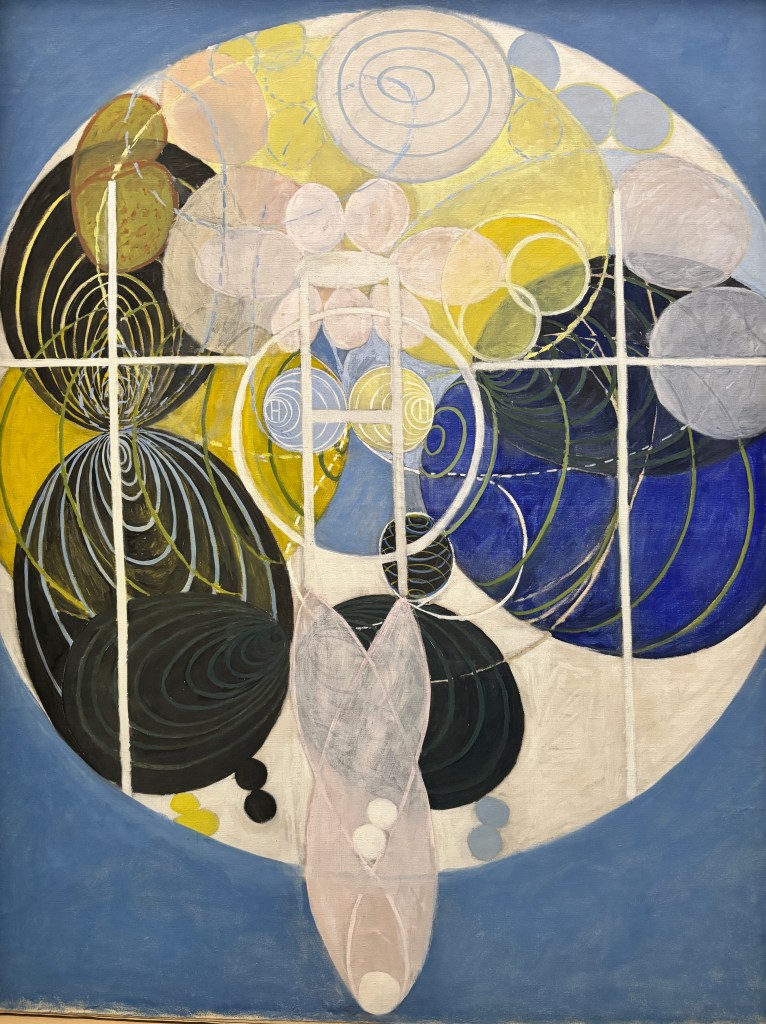
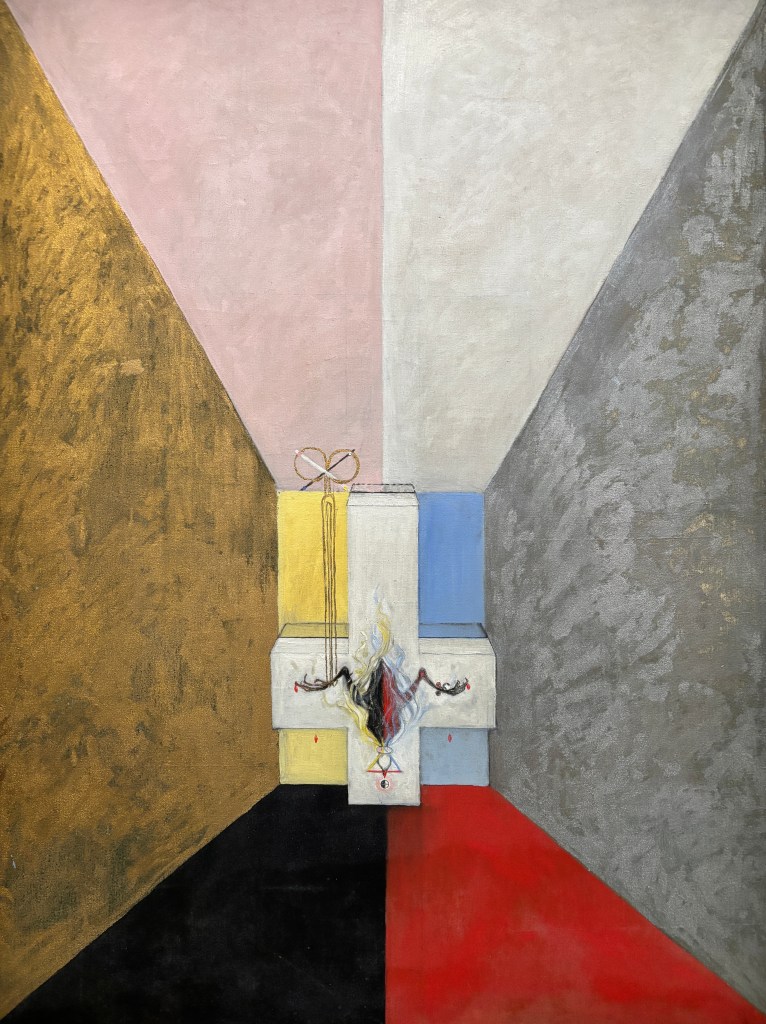
Early June in Europe can bring a variety of weather. Having already experienced a “heat dome” in late May, I expected Paris to be hot but I was met with pleasantly cool conditions. I took this as an opportunity to walk as much as possible, hopping on the metro only to duck a passing rain shower.
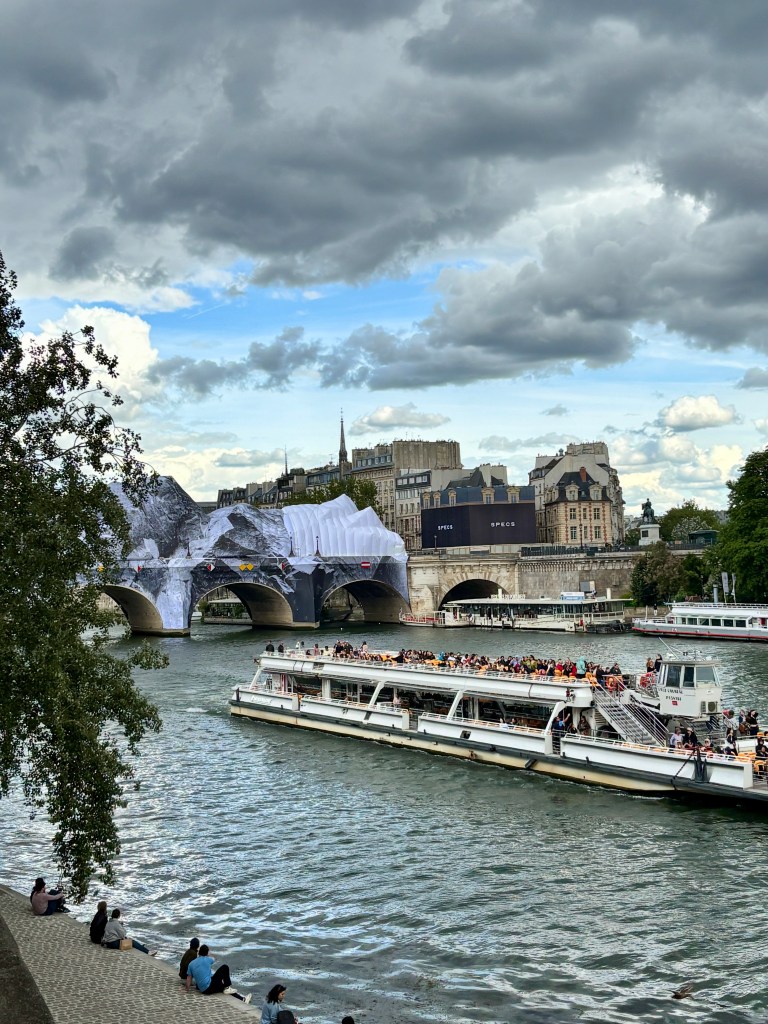
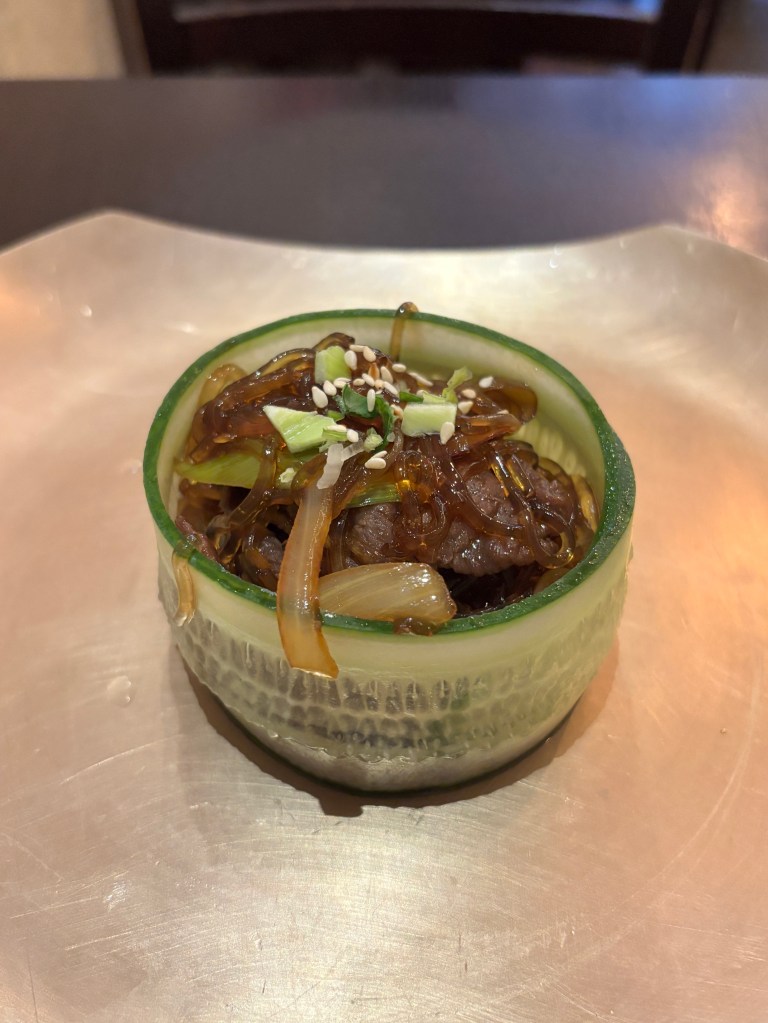
While along the Seine, I also caught JR’s current installation La Caverne on Pont Neuf. Inspired by the wrapping projects of Christo and Jeanne-Claude, this piece is currently under renovation, felled by high winds on opening day – a great reminder that no artwork is without its struggles. An amazing meal at Soon (Korean) capped off the night, also situated in Paris’ 8th Arrondissement.

When I plan a trip, I often use art exhibitions as an anchor. After deciding on the Klint show, I pondered what else I would like to see in Paris, a city of never-ending artistic experiences. Monet’s huge paintings at Musee de L’Orangerie had long been on my wishlist. As this was my first trip back to Paris in over a decade, I seized my chance.
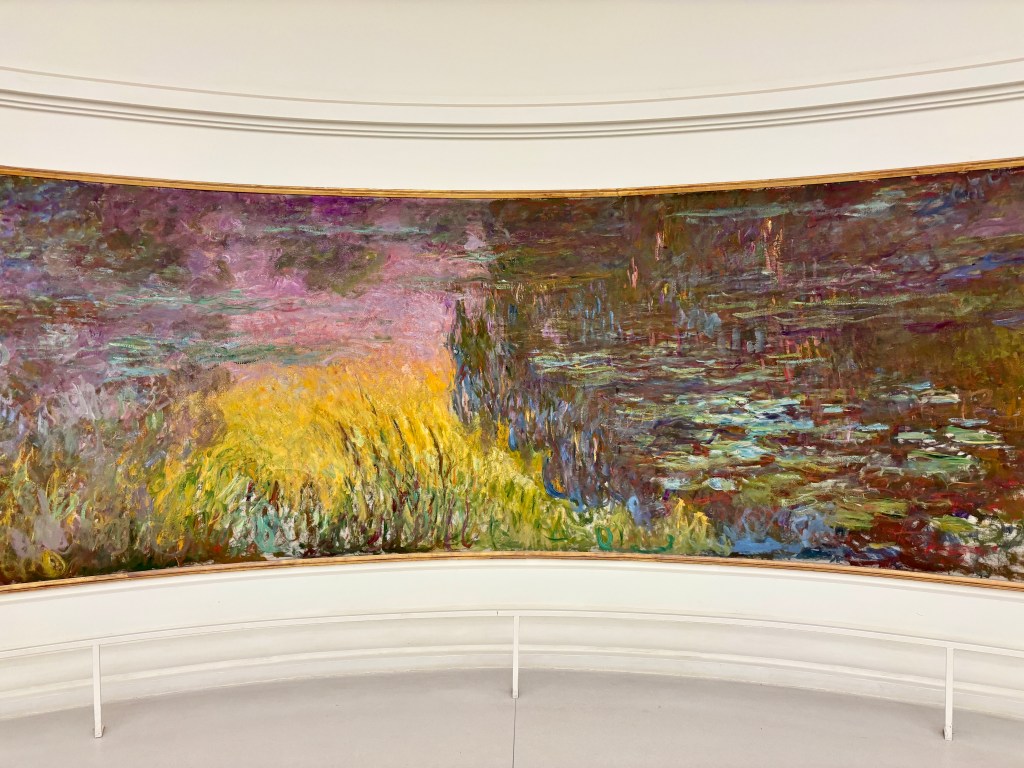
The Musee de L’Orangerie is also located along the Seine, between the Place de la Concorde and the Louvre. Eight of Monet’s famous waterlily murals are housed in oblong galleries best suited to their display. Though my photographs are devoid of people, the galleries most certainly were not. Even so, everyone adhered to the request for silence, as many find viewing these works to be meditative in nature.
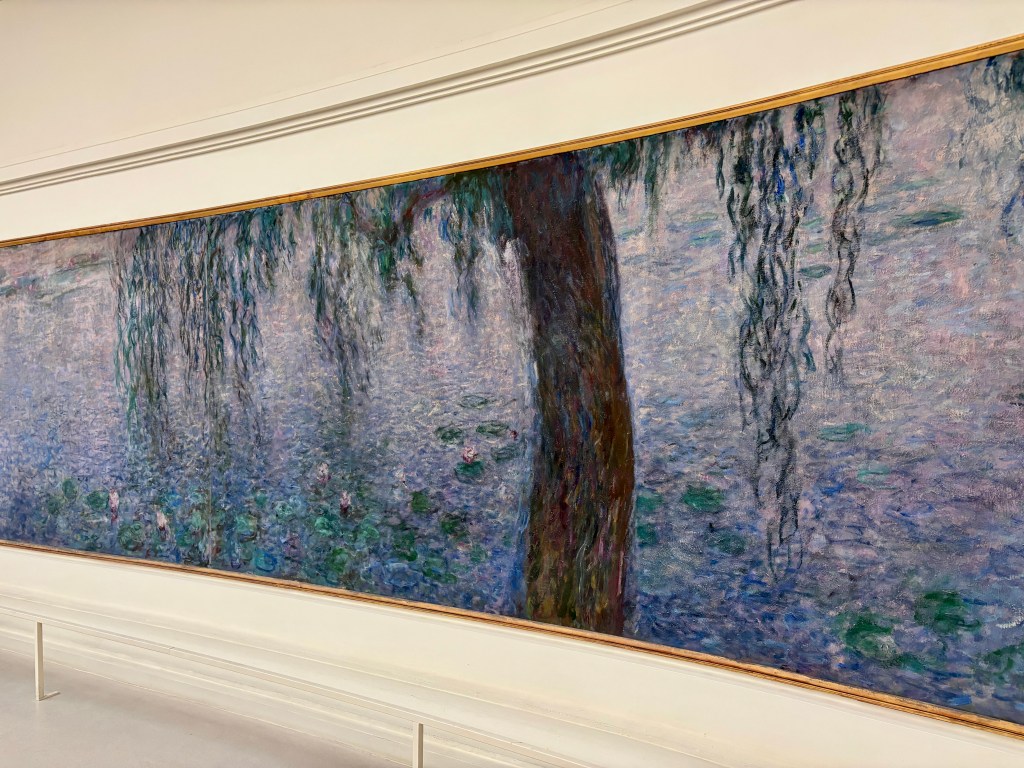
Monet’s waterlilies are known the world over, even considered by some to be commonplace against the daring art world of today. However, Monet was a rebel in his day – framing light as patches of color, working en plein air. This technique inspired the artistic movement that we know today as Impressionism. Though his early years as an artist saw struggle, by the time of his death in 1926, Monet’s fame had been cemented in the history books.
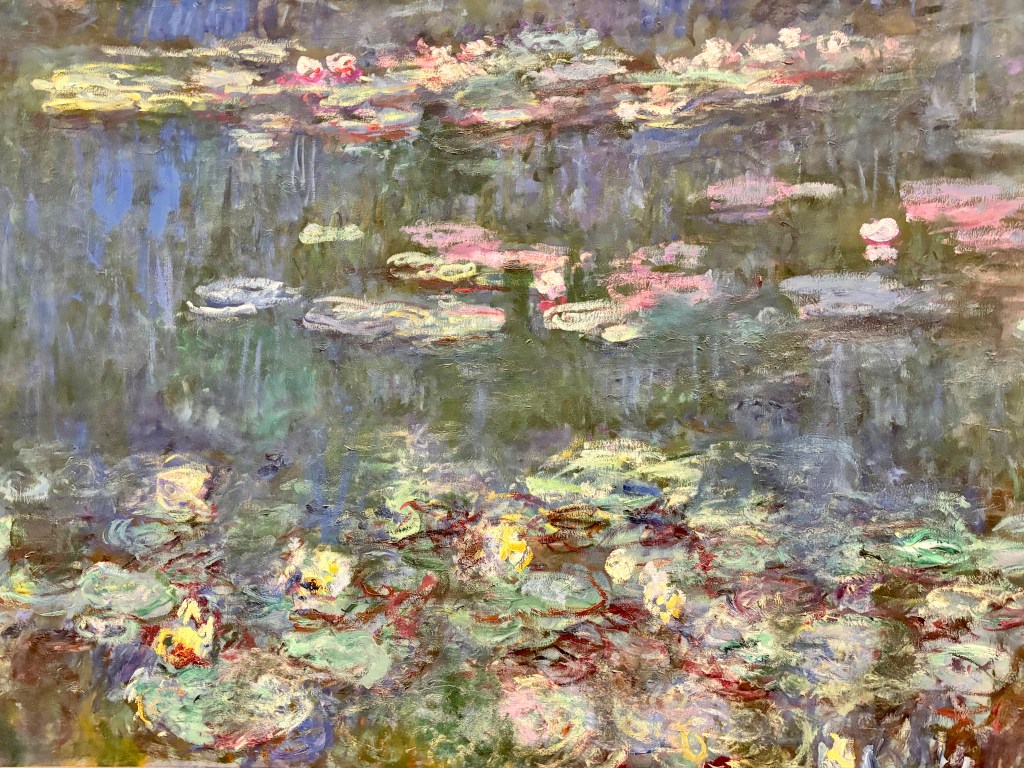
In the 1990s, The Museum of Fine Arts in Boston hosted two monumental exhibitions of Monet’s work. The immense popularity of these shows further expanded the Impressionist’s posthumous notoriety. Having attended these shows as a child, Monet served as a real entry point for my artistic education.
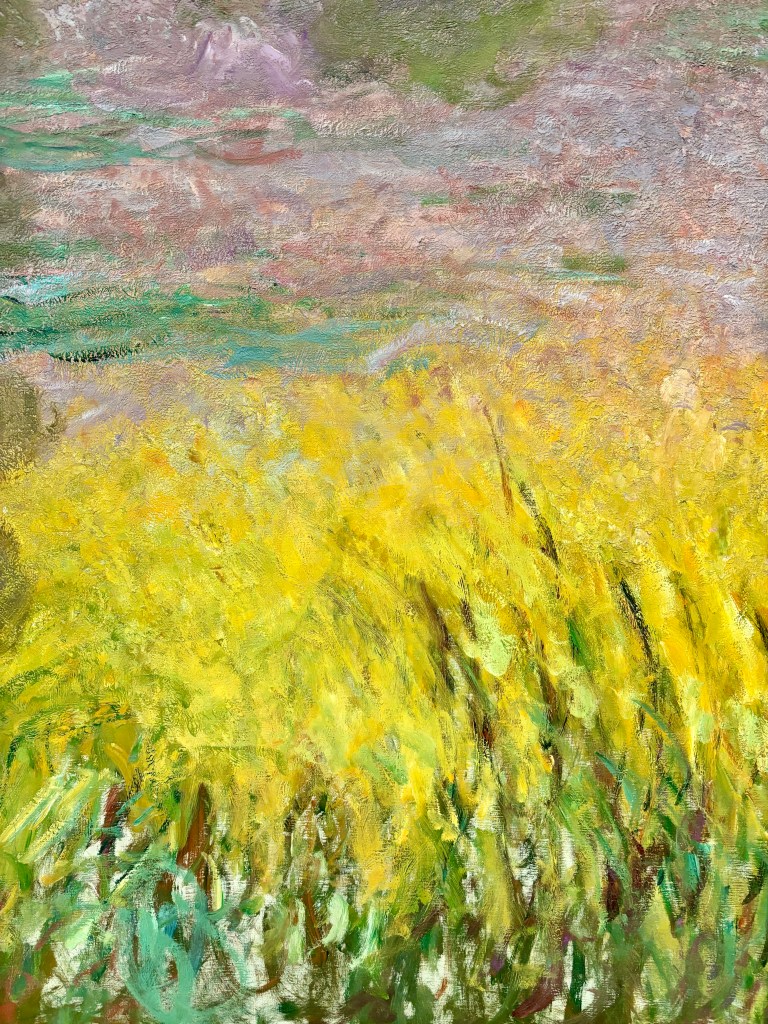
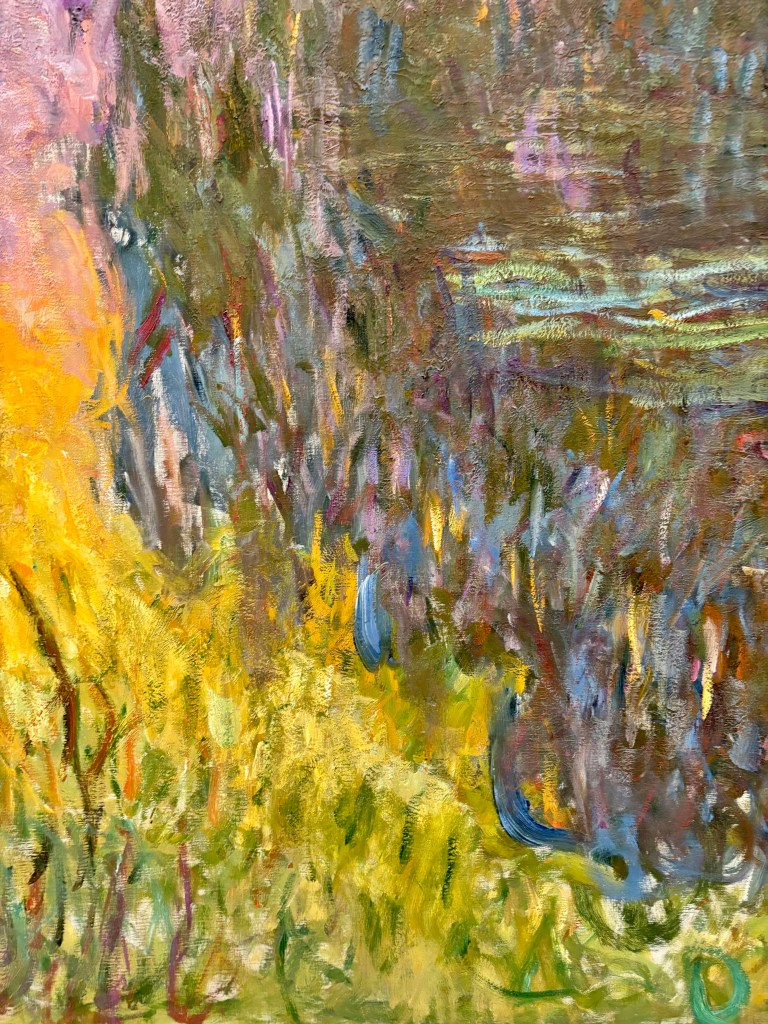
My favorite part of the experience was examining these major works up close, noticing Monet’s artistic choices. To paraphrase the 1995 film Clueless, “She’s a full-on Monet… from far away, it’s okay, but up close, it’s a big old mess.” Though his eyesight began to fail later in life, Monet’s keen ability to employ brushstrokes full of unexpected color make the landscapes pulse with life. The brushstrokes may be messy but they continue to resonate with viewers worldwide over 100 years later.
Next up… a trip to Giverny to see Monet’s garden for myself.



 SwissMissMeg
Leave a comment