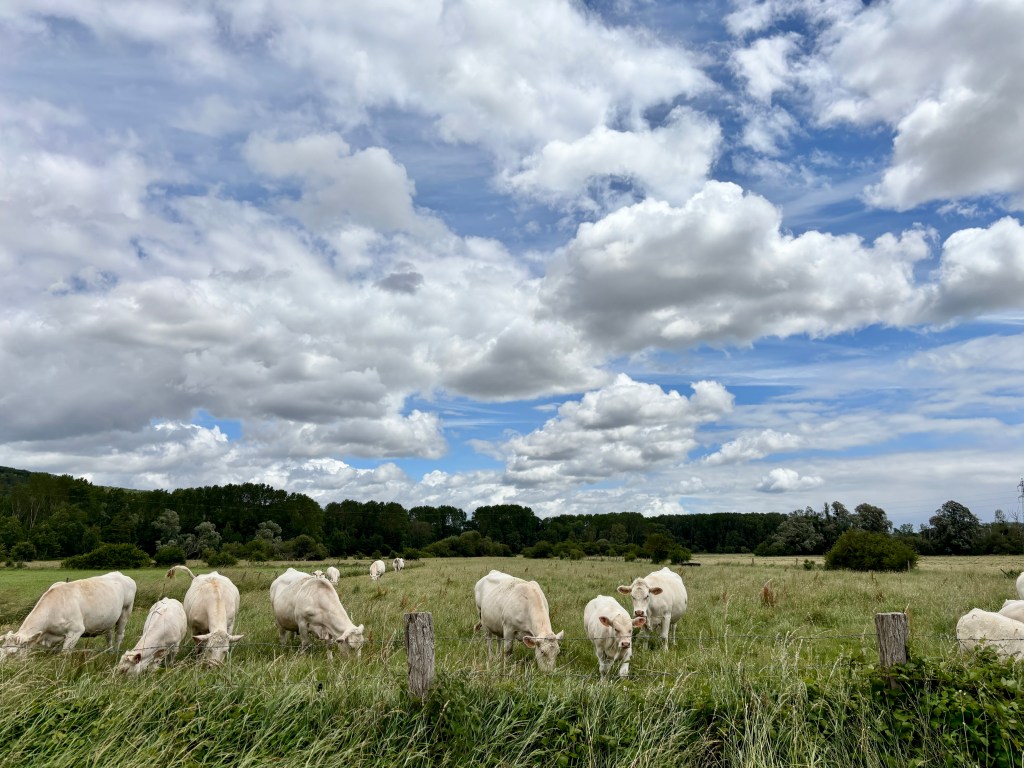
When I was little, I was given a book called Linnea in Monet’s Garden. The story told the tale of a young girl who visits Paris for the first time. She and her companion take a day trip to Monet’s garden in Giverny. After seeing Monet’s work at Musee de L’Orangerie, I thought it was time to see the spot that inspired him so deeply.
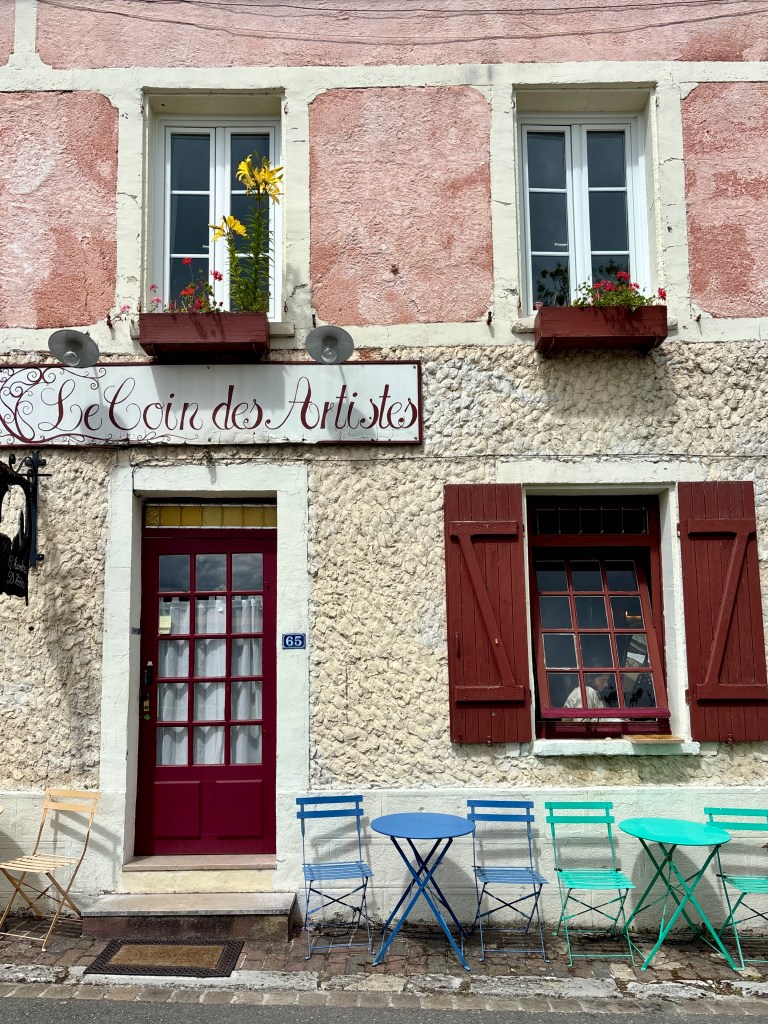
Perched on the edge of the Normandy region, Giverny is a bucolic village that now plays host to tourism surrounding Monet’s garden. Monet lived and painted here from 1883 until 1926.
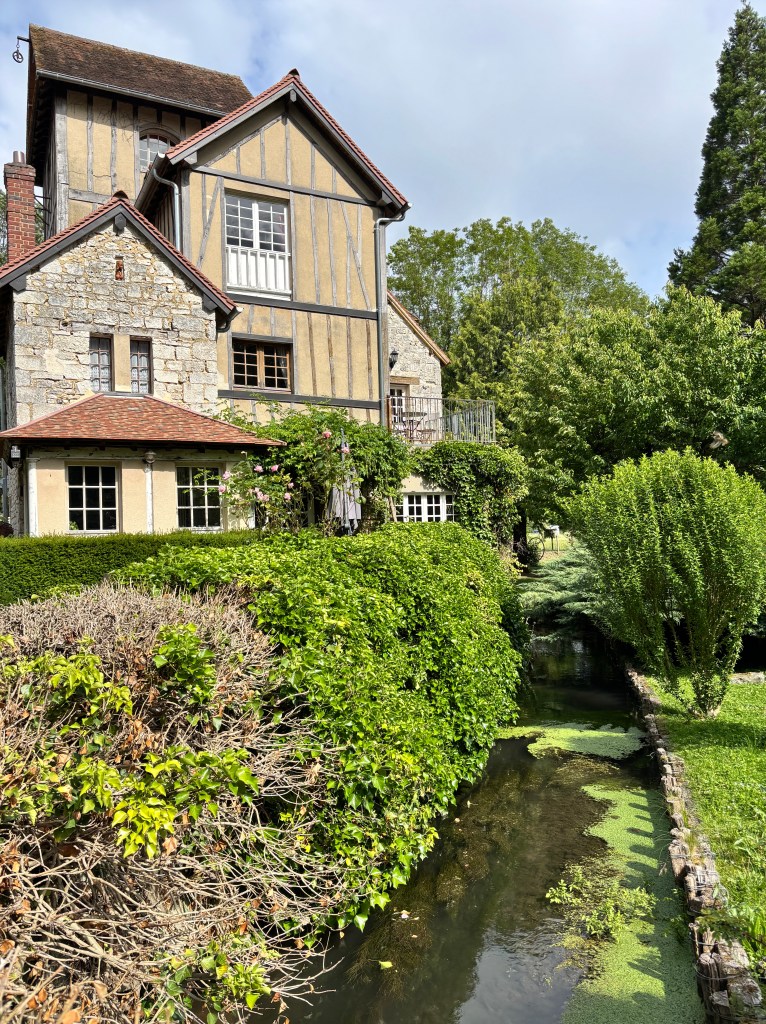
Seeking quaint and comfortable lodging, I happened upon Le Moulin des Chennevières. A family-run B&B, this renovated mill house is propelled by the same stream that runs through Monet’s Japanese water garden. Tiger lilies stretch their long necks away from the stream, willing themselves to remain rooted in the riverbank. Turkeys, chickens, and ducks grazed happily in their enclosure, an unseen tortoise rumored to be among them.
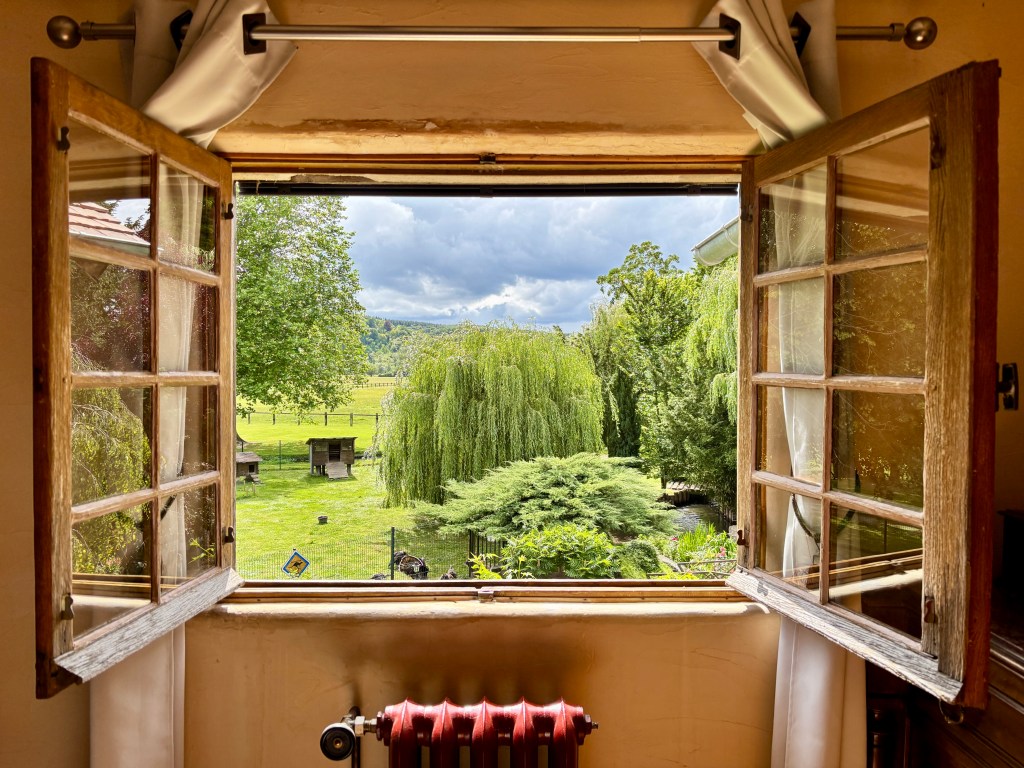
The view from my room was stunning, made even more epic by the gathering of impending storm clouds. Thankfully the rain held off and I was treated to blue skies during my visit to Monet’s garden, just a short walk down the road.
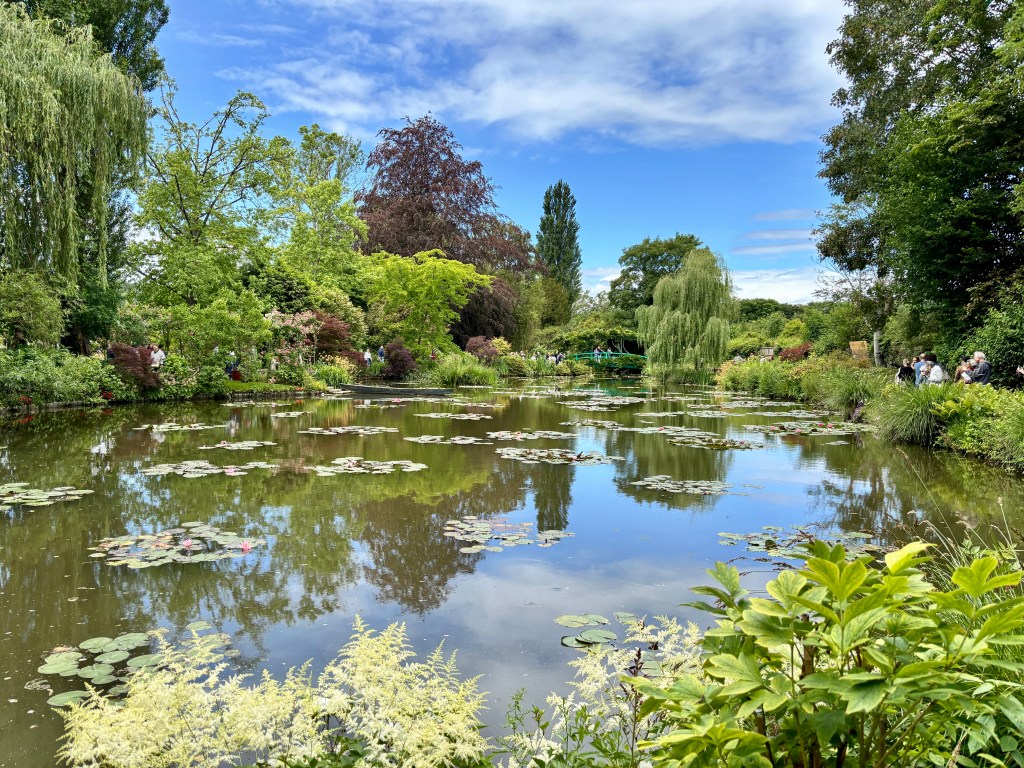
Monet chose the site for his Japanese water garden next to a stream, the pond is still today filled by the deft employment of locks. Lily pads dot the pond that visitors circumnavigate via footpath. The gardens attract over half a million visitors each year.
So why a Japanese water garden? Following Japan’s reopening to the West in 1854 (Commodore Perry et al.), Japanese art became highly popular in Europe. Monet was heavily influenced the prints flooding the art market in Paris, in particular the woodblock prints known as ukiyo-e still displayed throughout his home in Giverny today.
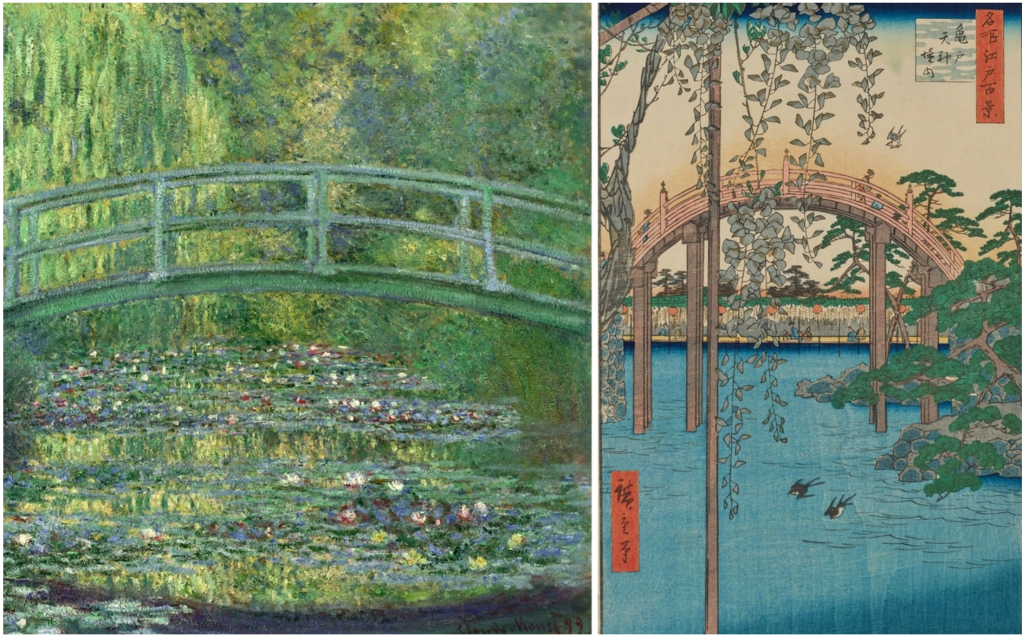
Left: Claude Monet, The Water Lily Pond, Oil on canvas, 1899, 88.6 × 91.9 cm, Pola Museum of Art
Right: Utagawa Hiroshige, One Hundred Famous Views of Edo: The Precincts of Kameido Tenjin Shrine, Large Format Color Woodblock Print, 1856, Tokyo National Museum
Though Monet never traveled to Japan, he adopted various techniques of Japanese painters in his works, such as the lack of a visible horizon line and an emphasis on atmospheric conditions, namely the shifting light to represent the passage of time. The famous footbridge brought Japanese architecture to the landscape of northwest France. And Monet’s love for the culture was absolutely reciprocated – Monet has been embraced by Japan since the early 1900s, with contemporary audiences traveling far and wide to appreciate his works.
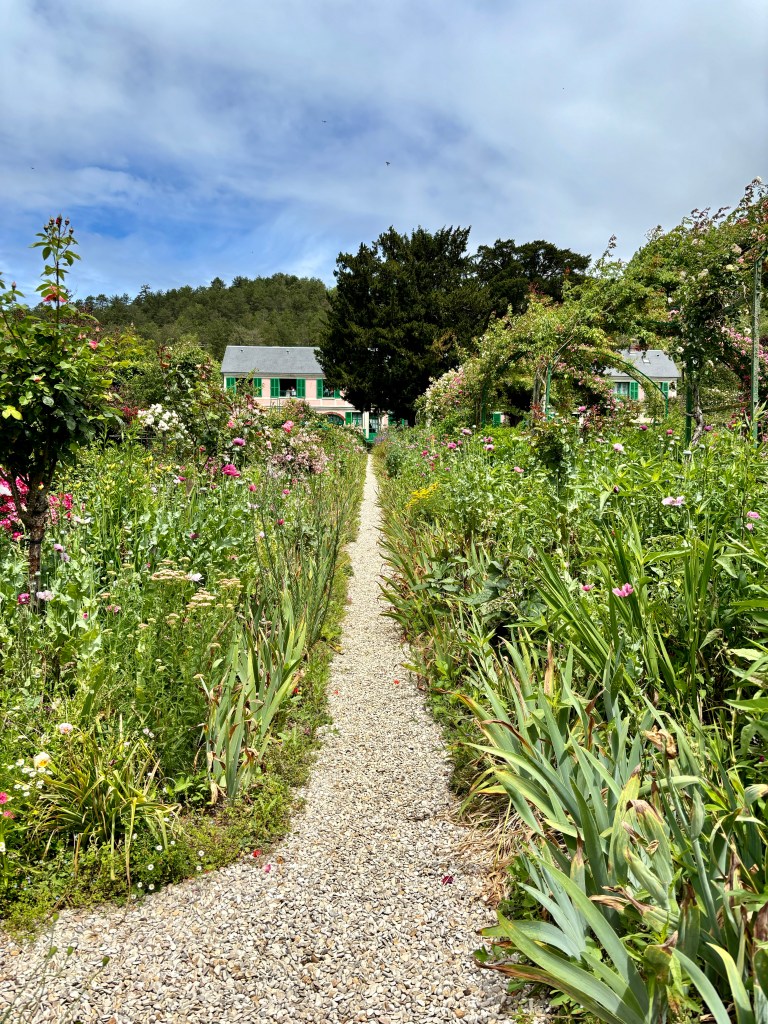
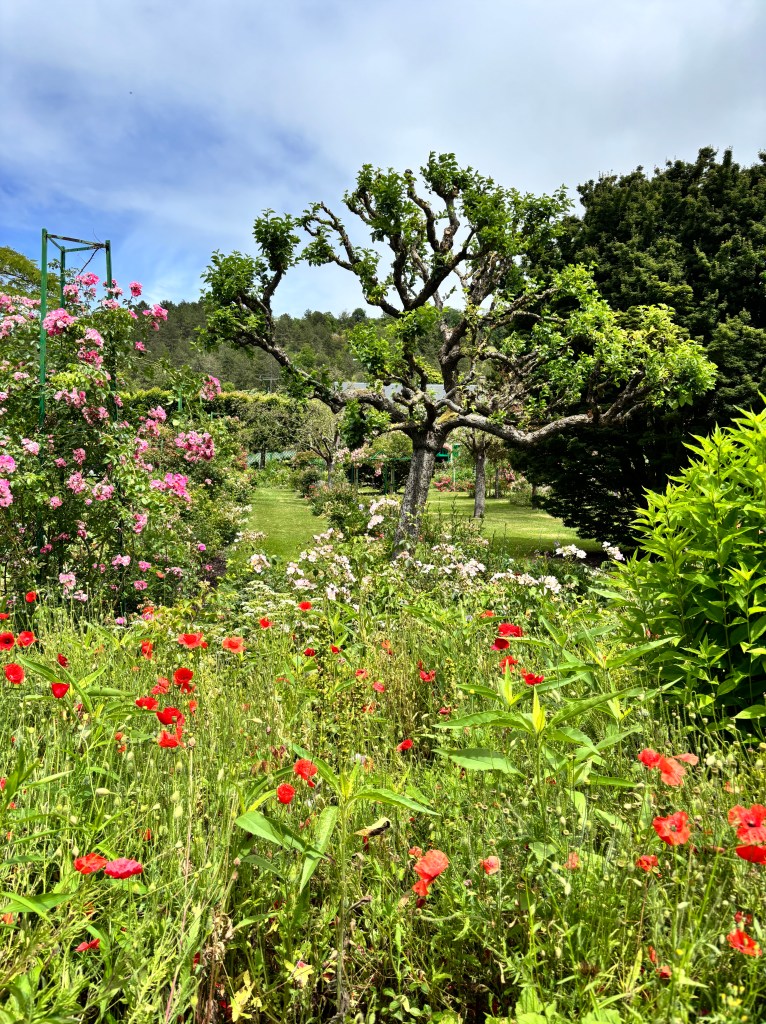
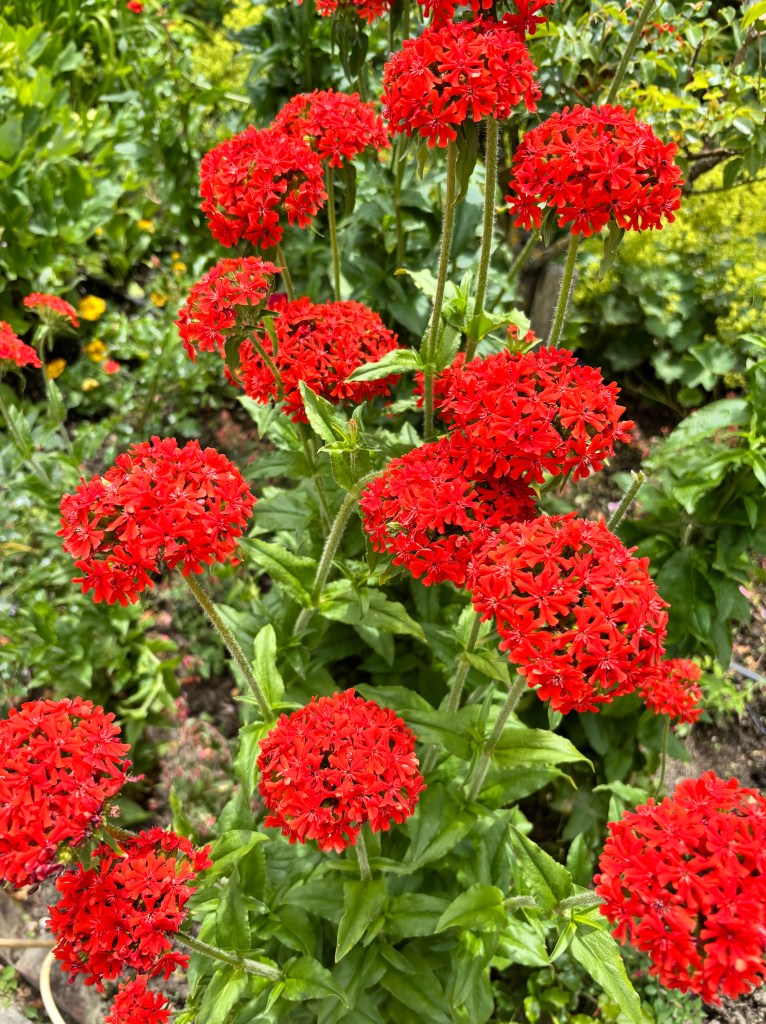
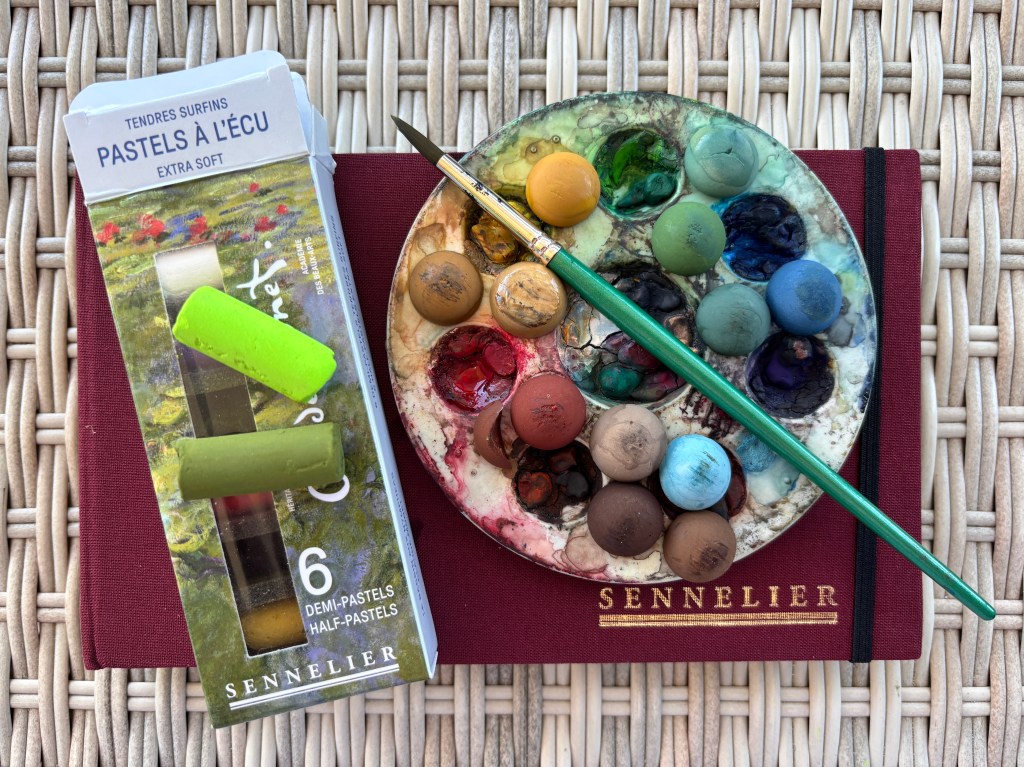
Upon entering the flower garden, I was struck by the sheer variety of flora found on the multi-acre grounds. From poppies to irises, the seemingly haphazard nature of the garden’s design is incredibly inspiring, as it was to Monet. While visitors are no longer permitted to paint within the garden grounds, I did treat myself to some pastels to enjoy back at the B&B. There is no denying – Sennelier is the best!
After seeing it for myself, it is no surprise that Monet was so taken with Giverny. The light really is special in France. The sky is unlike any blue I have seen before. It must have something to do with atmospheric conditions, cloud cover and humidity perhaps. When dappled rays of light dance through the poplars, there is nothing like it.
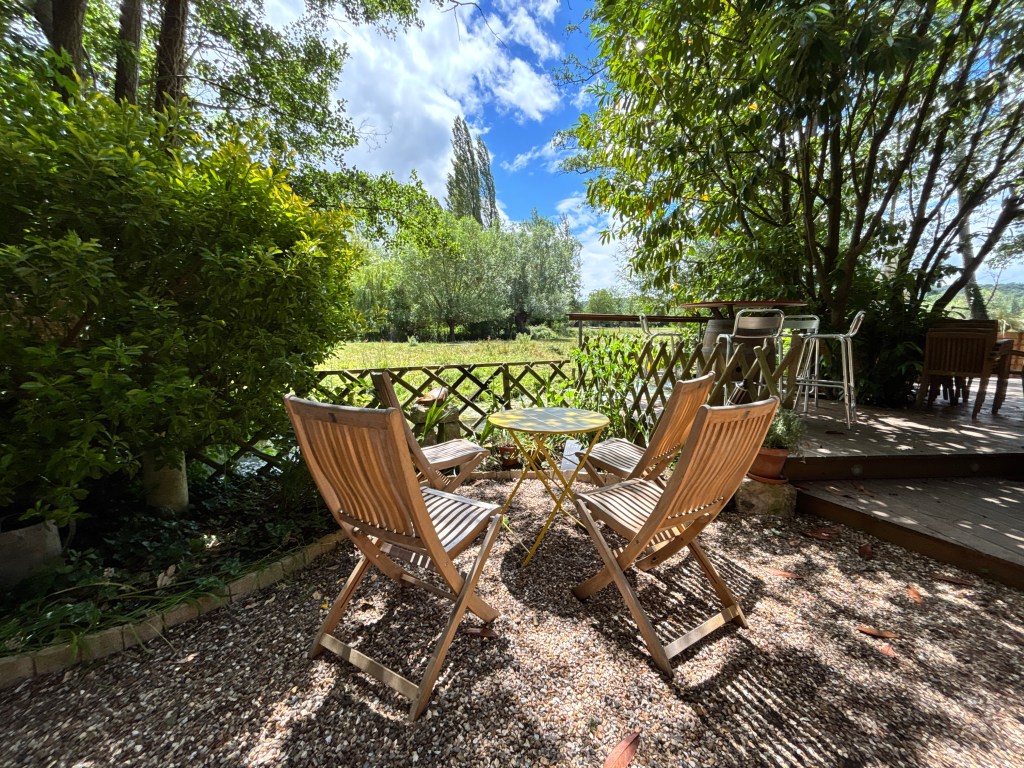
Eager for more time by the water, I made my way down the street to La Guinguette de Giverny for a late lunch.
Since the 19th century, the guinguettes, small restaurants located at the water’s edge, have been settled on the banks of the Marne and Seine rivers. A source of inspiration for Impressionist painters as well as chansonniers (popular songwriters), the guinguettes represented a real lifestyle where people took time to relax, to bathe, and, in the evenings, to dance under the lights of colored paper lanterns.
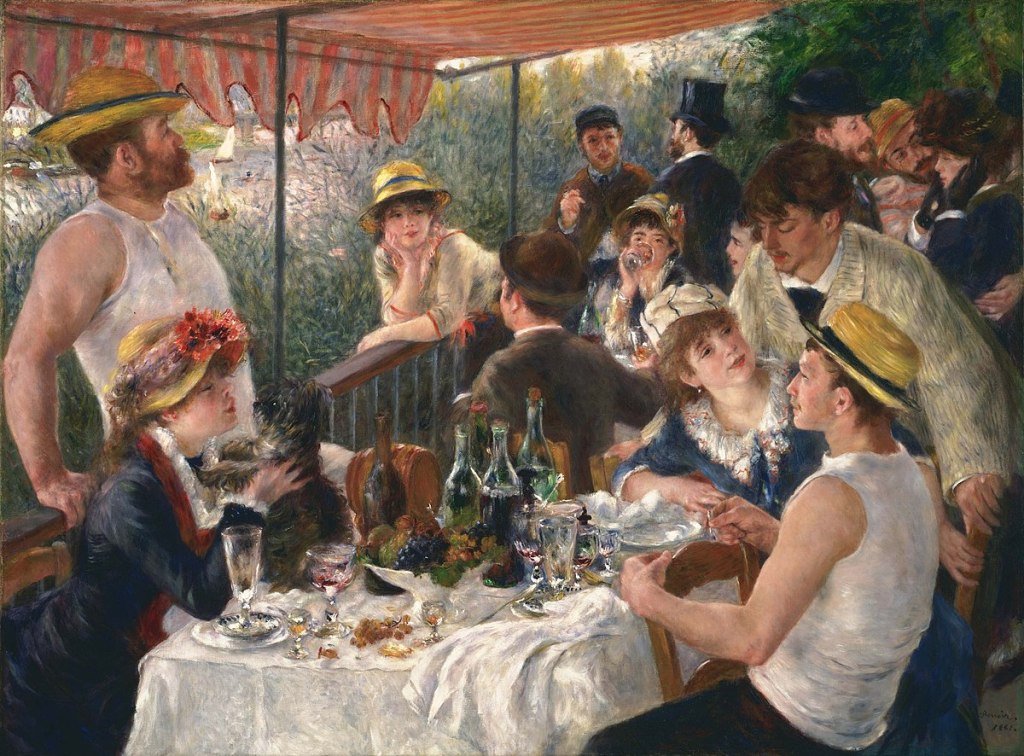
As I read this, Renoir’s Luncheon of the Boating Party (above) sprang to mind. I can think of no better place to enjoy a lazy summer afternoon, taking a dip in the river and enjoying idle chatter with friends.
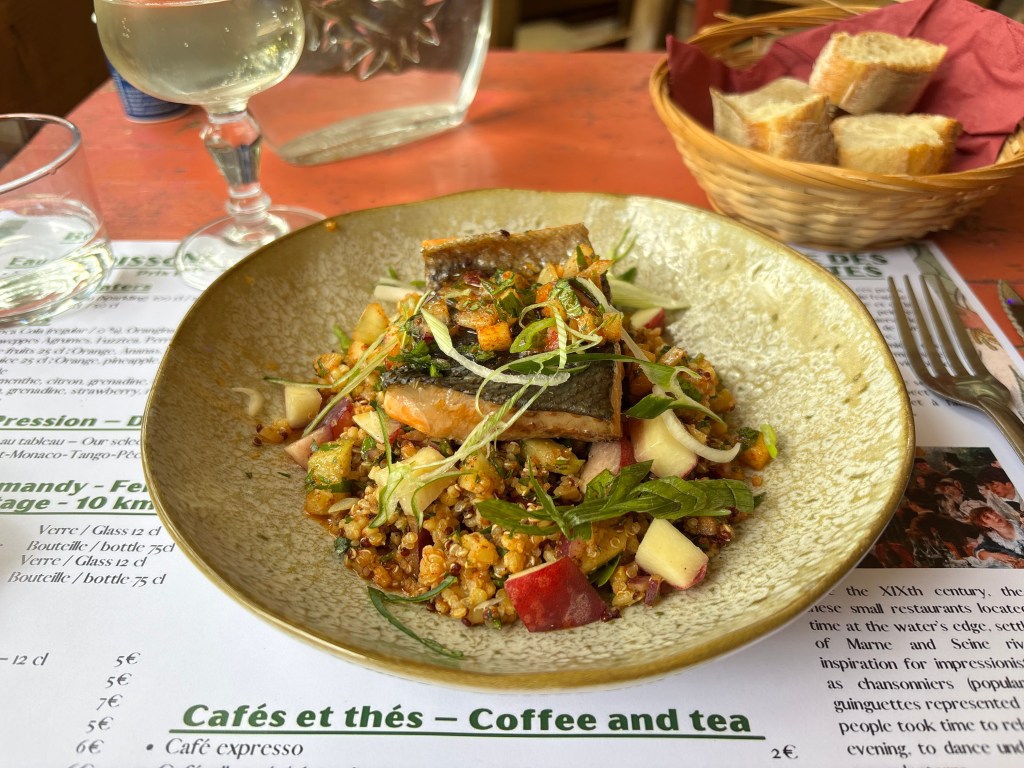
My meal of river trout was delicious. With nowhere I had to be, I sketched in my journal and eavesdropped on a table of older thespians sitting to my side. American and British in origin, they had been in France for quite a few decades, making their living writing musicals and acting in shows across the country – truly impressive. I would have loved to have sketched their portraits as their faces told many a tale.
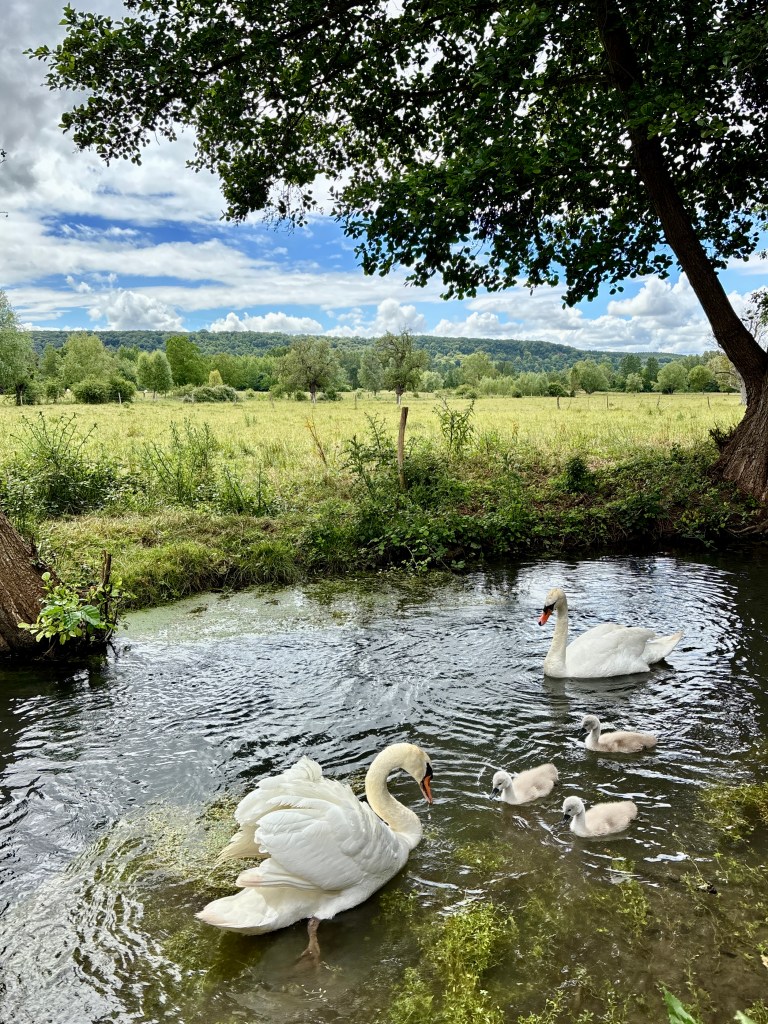
As lunch wound down, I was joined by a family of swans, the cygnets learning to feed at their parents’ direction. The cows laid down in the pasture, signaling an impending rain shower. I wished the swans goodbye and walked on down the road…



 SwissMissMeg
Leave a comment